
Getting started
Set up forms to capture UTM parameters and marketing attribution
Step-by-step setup to add Madlitics fields to forms so every response includes channel, campaign, and landing page attribution.
Start a free trial
To capture complete marketing attribution with Madlitics, you'll need to add hidden fields to your lead capture forms. These fields store attribution details like how a visitor arrived on your site, which campaign they engaged with, and which landing page they first saw. By enriching each submission with this first-party data, you’ll get a clearer view of every visitor’s journey—from first touch to form fill.
Whether you’re using a platform like Webflow, Gravity Forms, Typeform, WPforms, Jotform, or another form builder, the process is similar. Once the Madlitics fields are in place, Madlitics automatically fills them in behind the scenes and passes the data to your connected tools like your CRM or analytics platform.
1. Open your form in your form builder
Start by opening the form you want to use to capture lead attribution data. This could be in any platform — Webflow, Typeform, Gravity Forms, or whatever tool you're using.

2. Add fields to capture data.
Build your form however you like—whether that’s a simple contact form or something more advanced. To make sure attribution data comes through with every submission, you’ll need to drop in seven (7) fields powered by Madlitics. These fields work behind the scenes, automatically pulling in details like channel, campaign, and landing page without adding anything extra for your visitors to fill out.
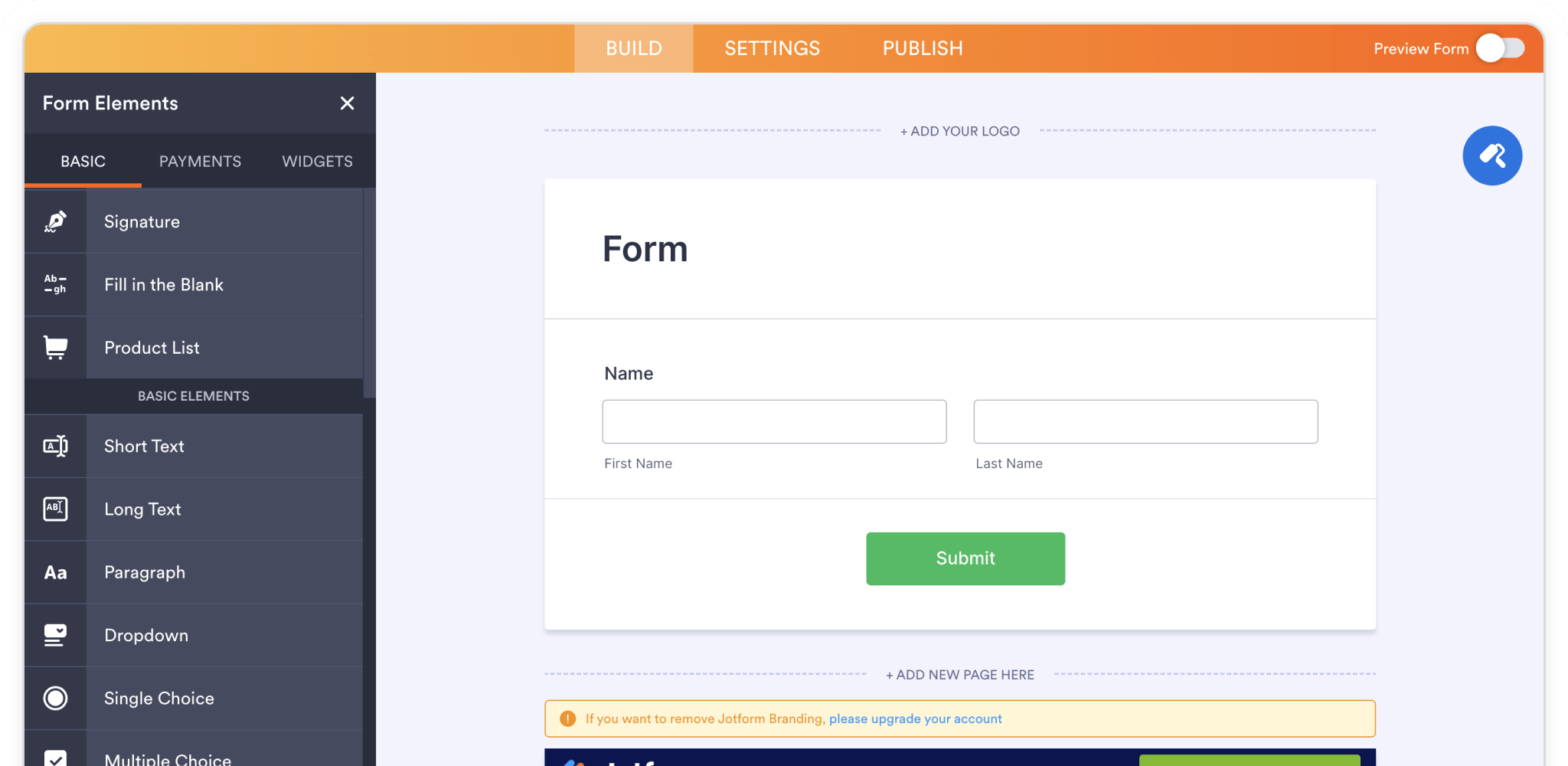
3. Configure all seven (7) fields
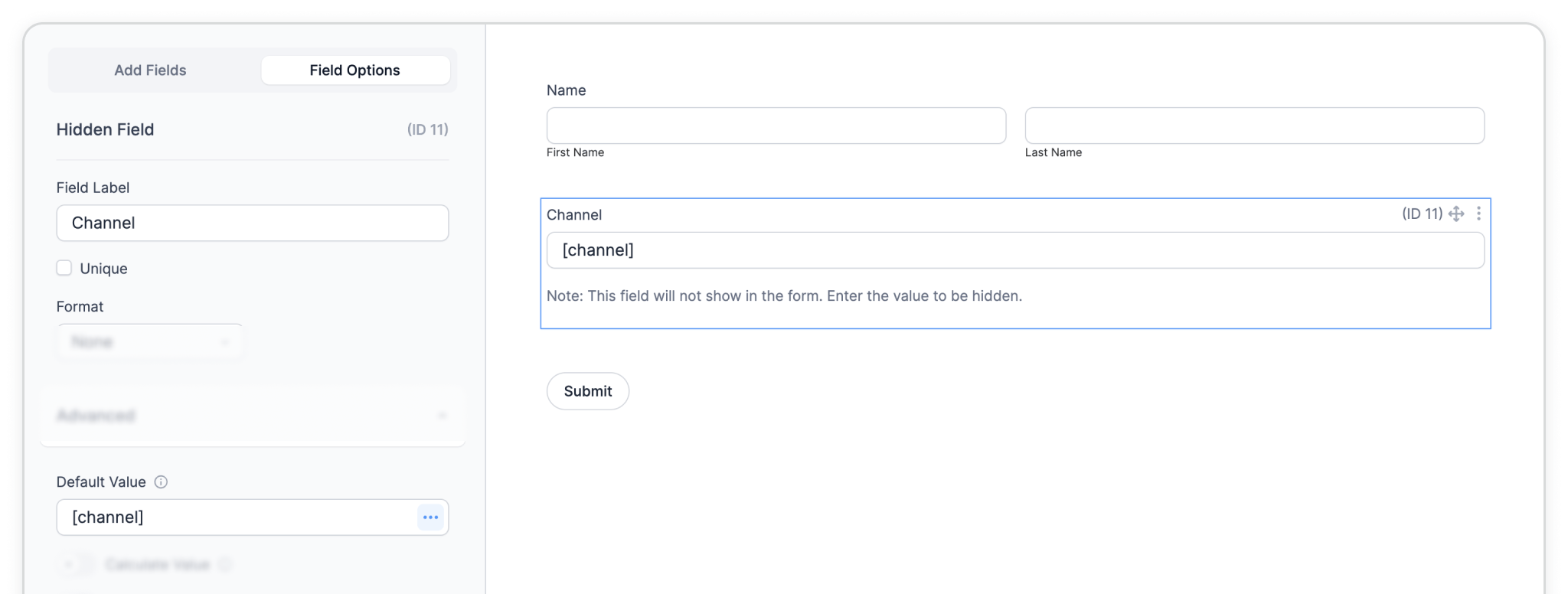
Place a field (typ. 'Hidden') in your form to store attribution data from Madlitics. A common pattern is to select the field to access the field properties. Within the field properties panel define the Field Label channel. Next usually found in an advanced portion of the field properties, define the Default Value to [channel].
Repeat this process for the remaining six (6) Madlitics fields. Once you’ve got all seven Madlitics fields configured, save your form — you’re ready to start capturing rich attribution data alongside your lead details.
Marketing Channel Category
Categorizes the visit’s marketing channel based on multiple signals, including traffic type, referring domain, and known platforms.
Field label: channel
Default value: [channel]
Segment 1
Captures the source of the traffic, identifying the specific platform, publisher, or partner that sent the visitor to your site; for paid traffic, this field records the utm_source, for organic traffic the platform, for referrals the referring domain, and for direct traffic no value is captured.
Field label: segment1
Default value: [segment1]
Segment 2
Captures the campaign-level details associated with the visit, identifying which campaign, promotion, or initiative led the visitor to your site; for paid traffic, this field records the utm_campaign, for organic traffic the referring domain, and for direct traffic no value is captured.
Field label: segment2
Default value: [segment2]
Segment 3
Captures the keyword, creative variation, or content-level detail that influenced the visit, such as a paid search term, specific ad, post type, or format; for paid traffic, this field records the utm_term, for organic traffic the full referring URL when available, and for direct traffic no value is captured.
Field label: segment3
Default value: [segment3]
Segment 4
Captures the audience, ad group, or offer associated with the visit, showing how the traffic was segmented within a campaign; for paid traffic, this field records the utm_content, and for organic and direct traffic no value is captured.
Field label: segment4
Default value: [segment4]
Landing Page
Captures the exact page where the visitor first entered your site, recording the original entry point of the session.
Field label: lp
Default value: [lp]
Landing Page Group
Captures the category or logical grouping of the landing page, allowing multiple related entry points to be analyzed under a shared identifier.
Field label: lpg
Default value: [lpg]
Configure additional Madlitics field value pairs for deeper customization and richer insights.
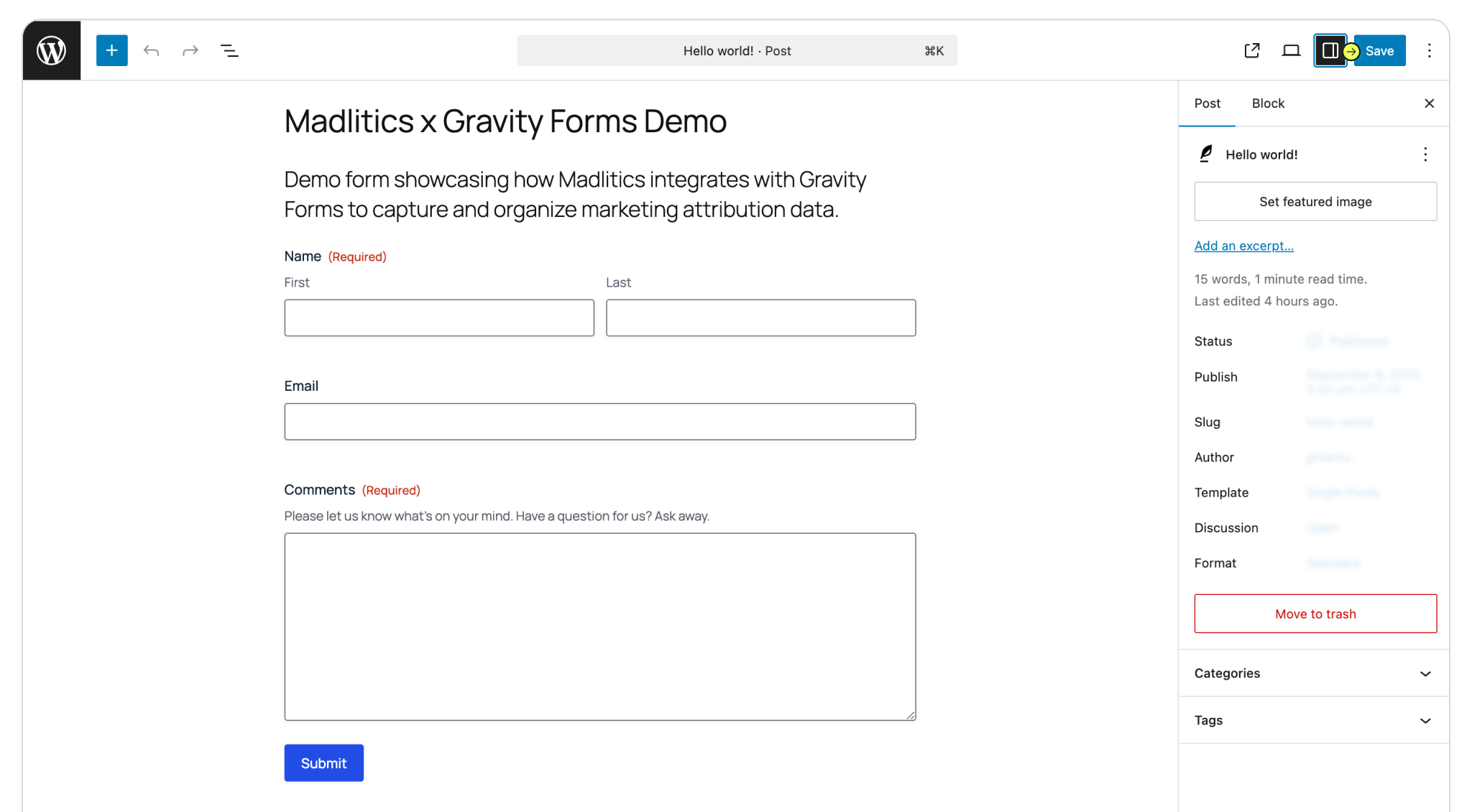
4. Embed the form on your site
Make sure the form is placed somewhere the Madlitics script is already installed and running — publish the form on a live page where visitors will submit it.
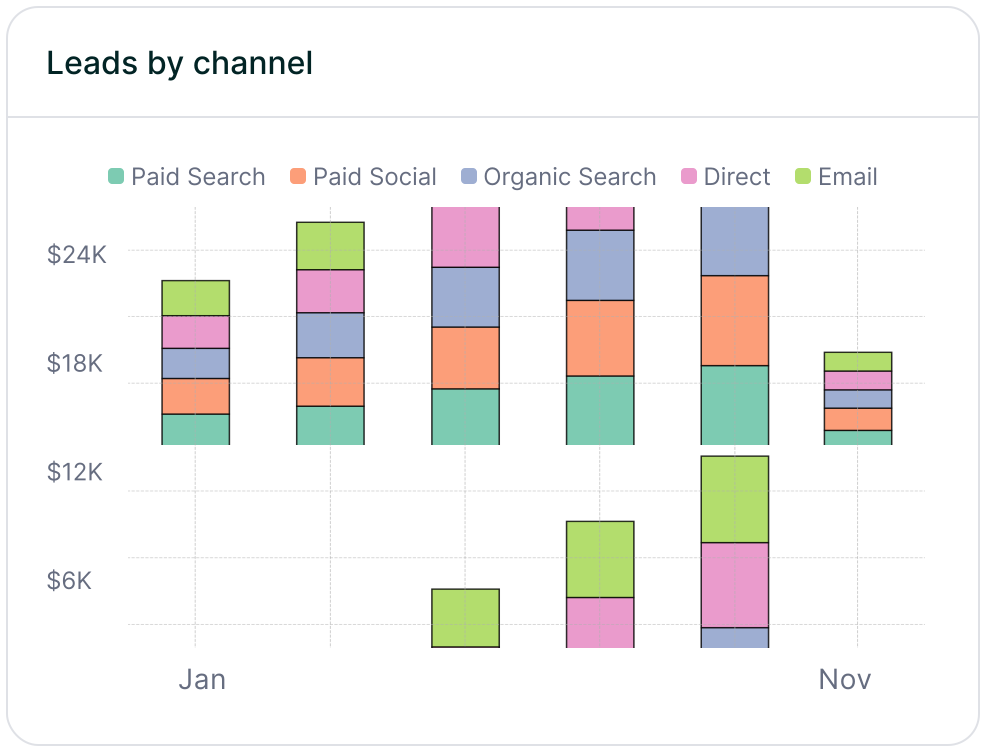
Once your Madlitics fields are set up, your forms are fully equipped to capture clean, consistent attribution data with every submission. Meaning, you’ll know exactly where each lead came from — whether it was a paid ad, social post, or organic search — and how they moved through your site before converting.
Getting attribution right at the form level is a big step toward smarter marketing decisions — and Madlitics makes it simple.
Answers to your top questions about our platform