Attribution Guide

Contact Form 7 Marketing Attribution: Stop Losing Lead Source Data

Madlitics enriches every Contact Form 7 submission with UTMs, click IDs, referrers, and landing page data; so you can see exactly which efforts drive results.
Start capturing attribution →
Attribution is broken
Automation icon indicating hands-free marketing attribution and data flow.
Analytics report icon, indicating data insights and reporting.
Impact measurement icon, symbolizing marketing effectiveness.
Personalization icon, representing customization features.

Madlitics automatically captures UTM parameters, click IDs (like gclid and fbclid), and referrer data when someone visits your site. This data flows through Contact Form 7 into your CRM, analytics, and marketing tools — giving you consistent, first-touch attribution data that shows exactly which channels and campaigns drive leads, conversions, and revenue.

Why this matters

Contact Form 7 is one of the simplest and most widely used WordPress form plugins. It’s lightweight, flexible, and easy to add to any page. But by default, it doesn’t tell you where your leads are coming from.

Without attribution data, a form submission is just an email address or a message—you can’t see whether it came from paid search, organic social, or an email campaign. That makes it difficult to measure ROI or understand which efforts actually generate results.

Marketers often try to solve this by manually adding hidden fields or using tracking plugins that slow down the site or require complex configuration. Madlitics eliminates all of that by providing a lightweight, no-plugin solution that automatically records how each visitor found you and attaches that data to their Contact Form 7 submission.

How Madlitics solves it

Madlitics acts as an invisible layer between your marketing channels and your WordPress site. When someone lands on your page, it records their first-touch data—UTMs, click IDs, referrer, and landing page—and stores it locally in the browser.

When that visitor fills out a Contact Form 7 form, Madlitics populates your designated Madlitics Fields with all that attribution data, ensuring each submission includes the full marketing context. From there, the data flows directly into your connected CRM or analytics platform, giving you a clear picture of which campaigns and sources are driving conversions.

There’s no coding required and no new dashboard to manage—Madlitics simply makes your existing workflow smarter and more consistent.

Madlitics multi-channel attribution visualization, showing marketing platforms like TikTok, Instagram, Google, and Facebook. The graphic highlights how different sources contribute to high-performing marketing channels.
Screenshot of a form builder interface with a highlighted 'Hidden Input' field. Accompanied by text explaining how to install and set up Madlitics by adding hidden fields to capture marketing attribution data.
CRM interface showing a detailed view of captured attribution data, including marketing channels, segments, and landing pages. A business profile of a lead is displayed, highlighting how Madlitics enriches lead data for sales and marketing teams.
Graph showing new customer growth from TikTok, Instagram, Snapchat, and Google over time, with social media icons surrounding the chart and a callout for social revenue impact.

How to set up Madlitics with Gravity Forms

Setting up Madlitics with Contact Form 7 only takes a few minutes.

Add the lightweight Madlitics script to your WordPress site, either manually or through Google Tag Manager. Then add seven Madlitics Fields to your Contact Form 7 form—these fields automatically capture your visitor’s channel, campaign, and landing-page data whenever they submit the form.

Because Contact Form 7 is so lightweight, Madlitics integrates directly with the form markup—no plugin dependencies or event hooks needed. Once installed, every form submission will automatically include clean, structured attribution data that can be viewed in your CRM, lead management tool, or reporting system.

To test your setup, submit your form and verify that the Channel and Landing Page fields populate automatically.

For detailed steps, visit the Contact Form 7 integration guide.
To learn more about how Madlitics Fields work, see the Madlitics Fields Value Pairs article.
And for validation best practices, review the Madlitics Testing Overview.

Common Questions

Does Madlitics capture Google Ads click IDs in Contact Form 7?
Yes. Madlitics automatically captures gclid, fbclid, and msclkid parameters from your paid campaigns. Those values are saved and passed into your form submissions, making it easy to connect leads to specific ads or campaigns.

Can I add the Madlitics script through Google Tag Manager?
Absolutely. GTM installation works perfectly. Just ensure the tag fires in the <head> of your site so the script loads before your Contact Form 7 form appears.

What happens if a visitor returns to my site through another channel?
Madlitics uses first-touch attribution, meaning it always prioritizes the visitor’s original source. That ensures consistent, reliable attribution data across all submissions.

How Madlitics Compares to Other Tools

Other tools try to capture attribution data for Contact Form 7 using extra plugins or custom JavaScript, but those approaches often cause conflicts or produce inconsistent data. Madlitics was built specifically to solve that problem.

Instead of adding another analytics platform or plugin, Madlitics integrates directly into your existing workflow. It’s form-first, meaning attribution data is captured and passed directly into your Contact Form 7 submissions — where it belongs.

Competitors like GA4 can collect similar parameters, but they rely on dashboards and complex integrations. Madlitics focuses on data consistency and visibility — making sure every lead submission contains complete, trustworthy marketing data that your CRM can use to close the attribution loop.

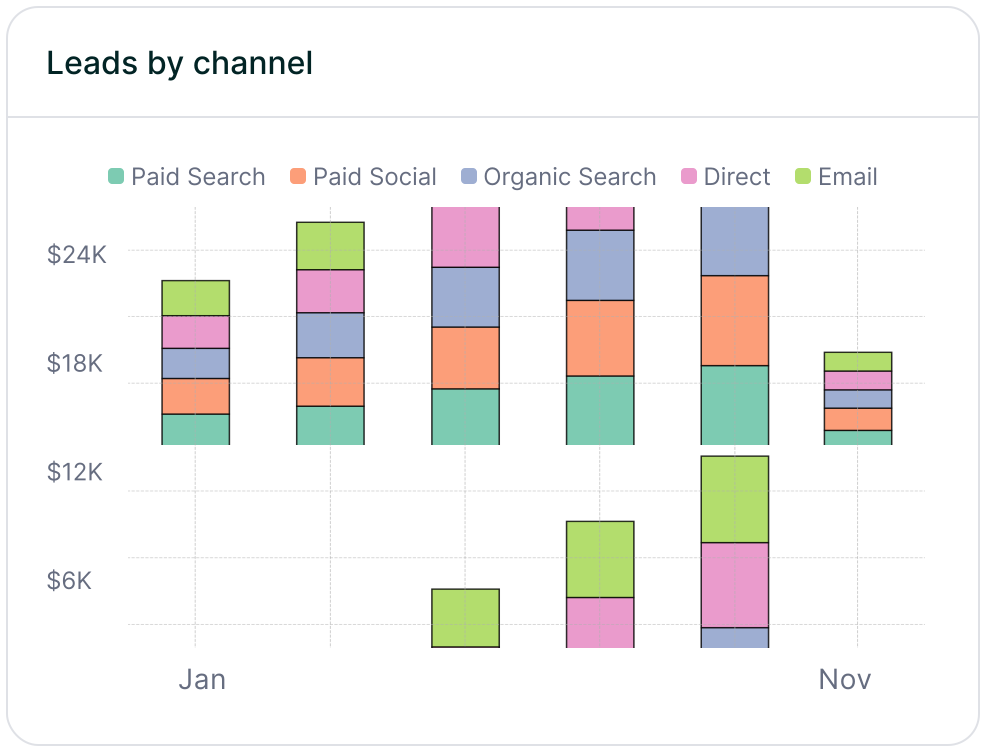
Stacked bar chart showing lead generation by marketing channel over time, comparing sources like Paid Search, Paid Social, Organic Search, Direct, and Email. Helps visualize which channels drive the most traffic.
Stacked bar chart illustrating lead volume across different marketing campaigns, including Black Friday, Retargeted, Spring Promo, Referral, and SEO. Highlights trends in campaign effectiveness.
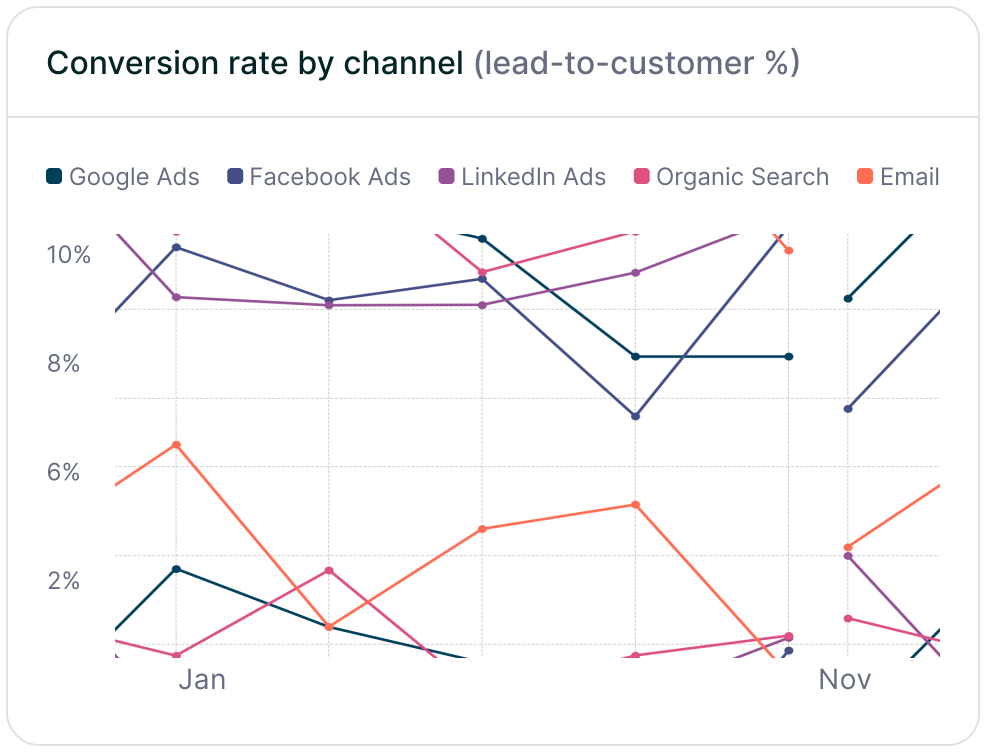
Line chart displaying lead-to-customer conversion rates by channel, comparing Google Ads, Facebook Ads, LinkedIn Ads, Organic Search, and Email. Shows how different sources drive qualified leads over time.
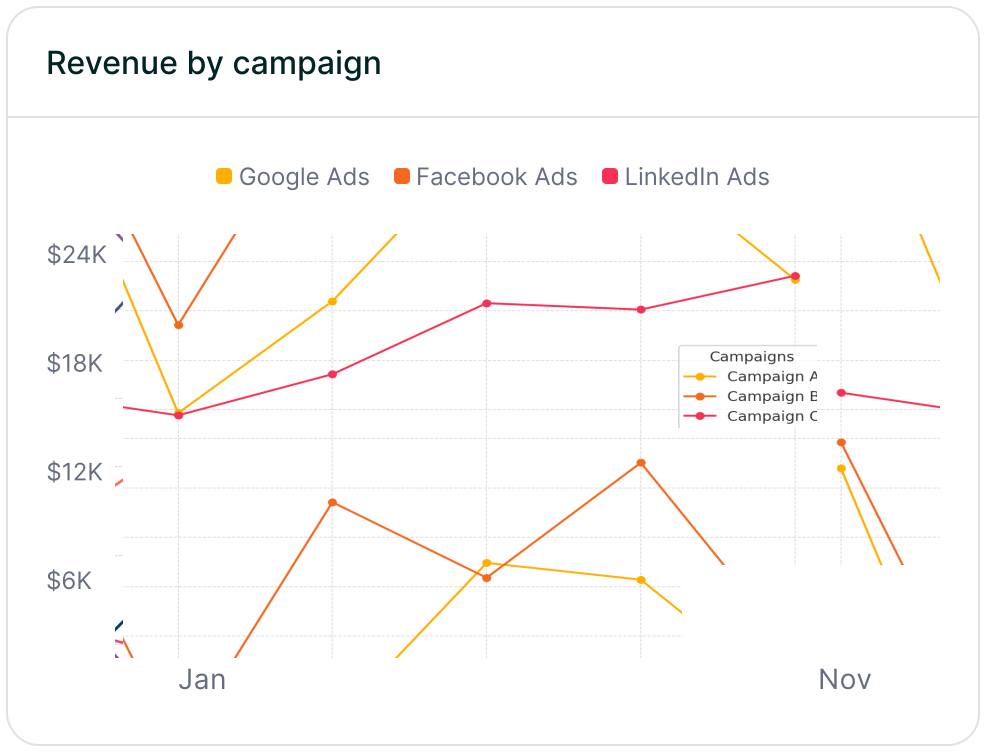
Line chart showing revenue performance by marketing campaign, comparing Google Ads, Facebook Ads, and LinkedIn Ads. Helps identify top-performing and underperforming campaigns.

What's next?

Start capturing attribution data automatically in your Contact Form 7 submissions.
Follow our integration guide and see how Madlitics brings clean, consistent attribution data directly into your CRM.

Madlitics installs in minutes, runs silently, and gives you visibility into which channels, campaigns, and keywords are actually driving results.

Related articles to get you started with Madlitics

Frequently asked questions

Answers to your top questions about our UTM parameters
Everything you need for reliable lead attribution
Accurate, persistent, and automated tracking — so your campaigns perform at their best.
Performance icon symbolizing marketing campaign effectiveness and results tracking.
Outperforms basic UTM tracking
Madlitics captures, categorizes, and persists attribution data across sessions, giving you a complete, structured view of what’s working in your marketing. Say goodbye to losing attribution when users navigate your site, struggling with formatting inconsistencies, and ingored non-UTM traffic.
Capture icon indicating data collection from various marketing channels and sources.
Capture all traffic
Madlitics categorizes all inbound leads — whether they have UTM parameters or not — so every conversion is accounted for, and you won't miss out on Organic Search, Organic Social, and Referral traffic.
Routing icon representing the flow of marketing data and attribution pathways.
Attribution across pages and sessions
A LinkedIn ad click should be attributed correctly—even if the visitor signs up on a different page later. If someone clicks an ad, browses multiple pages, then submits a form later, Madlitics persists attribution data across sessions, ensuring your reports reflect true performance.
List icon representing structured marketing data, reports, or campaign breakdowns.
Cleaner, more reliable data
Duplicate UTMs and inconsistent formatting break reports and mislead teams. Madlitics cleans and organizes attribution data before sending it to your CRM, giving you accurate insights.
Target icon symbolizing precise audience targeting and marketing campaign focus
See which content converts
Attribution isn’t just about where visitors came from—it’s about what convinced them to convert. By capturing landing page data alongside UTM parameters, Madlitics shows you which blog posts, case studies, or pricing pages drive the most revenue, helping you scale content that works.
Action icon representing campaign execution, optimization, and engagement.
Transform form submissions into actionable insights
Madlitics connects marketing touchpoints to lead generation, ensuring every form submission is fully attributed — optimize ad spend by identifying high-ROI channels, refine messaging based on what content drives engagement, make data-driven decisions with clean, structured reports, and more.