Digital Marketing
How to capture Meta Ads data in Fluent Forms
Bring Facebook and Instagram campaign attribution into Fluent Forms submissions alongside your leads’ contact details.
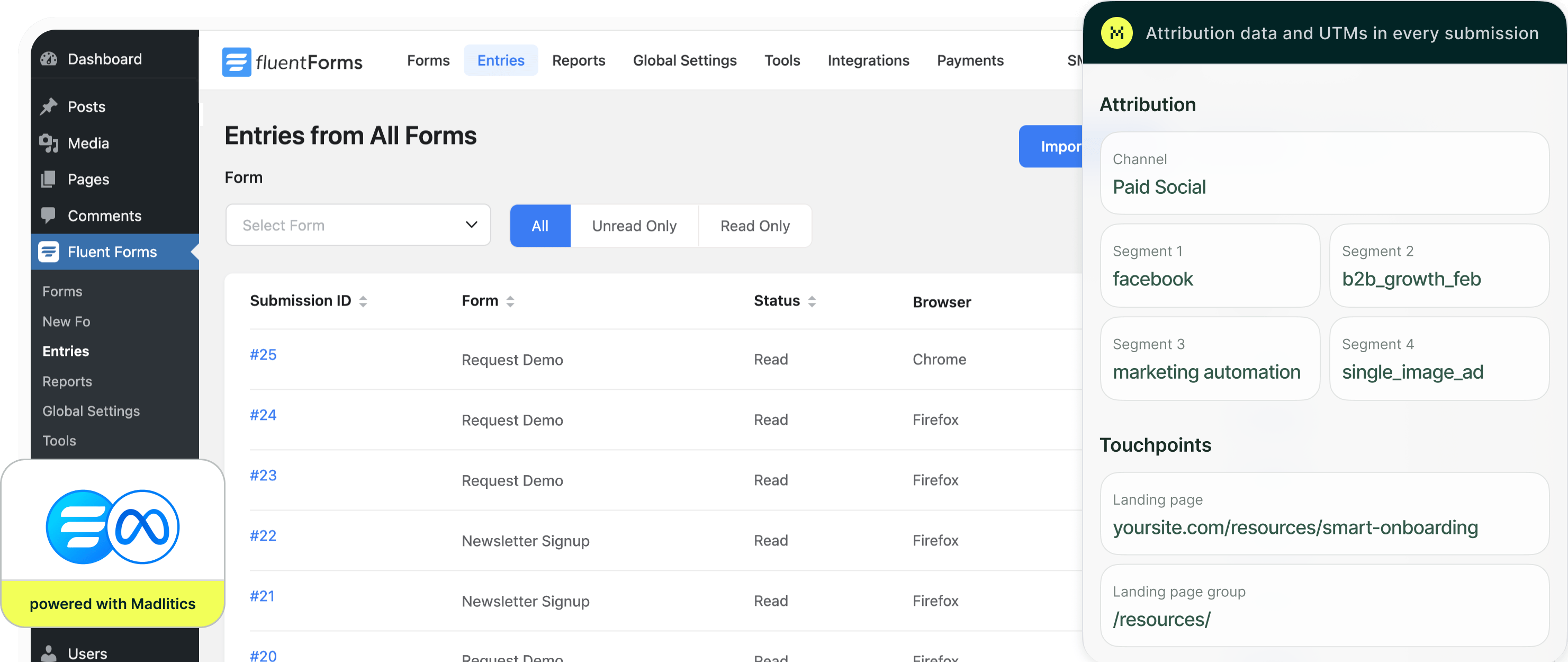
Connecting Meta Ads data with Fluent Forms submissions helps you see which Facebook and Instagram campaigns generate leads and which leads become customers.
Madlitics preserves available original campaign, ad set, creative, and landing page details as visitors browse your website and return later. It writes that attribution into configured Fluent Forms fields alongside the visitor’s contact information.
Map those fields into your CRM to compare campaign performance through lead quality, pipeline, and revenue. This guide covers Meta ads that send visitors to your website to complete a Fluent Forms form.
Meta Ads traffic metrics show which campaigns attract visitors. Connecting those campaigns with lead and customer records shows how that activity contributes to business growth.
The illustrative figures below compare traffic performance with customer and revenue outcomes.
Meta Ads Campaign Performance Based on Traffic Metrics
The Awareness campaign brings the most visitors at the lowest cost per visit. Customer and revenue data reveals a different view of performance.
Meta Ads Campaign Performance Connected to Leads, Customers, and Revenue
The Retargeting campaign generates 17 customers and $126,000 from 121 leads, compared with three customers and $11,000 from the Awareness campaign’s 201 leads.
Connecting original campaign attribution with CRM outcomes helps you see which campaigns turn interest into customers and revenue.
Connect Facebook and Instagram campaigns with your lead records.
Install Madlitics across your WordPress site so it can capture original attribution when visitors arrive from your Meta campaigns, including on landing pages without a form.
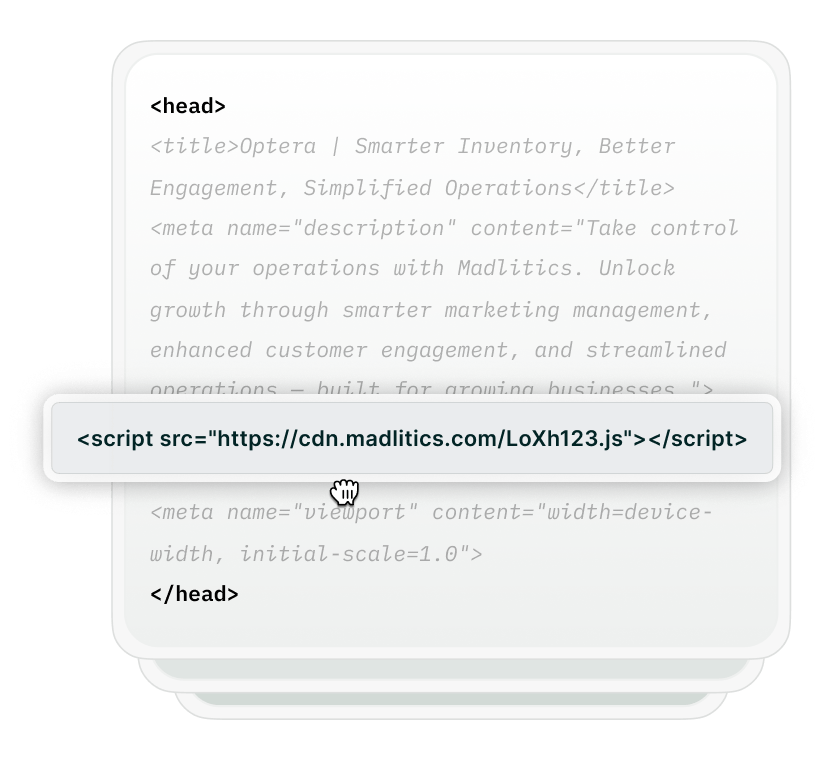

Tag your destination URLs with source, medium, and campaign values. Use utm_term for an ad set and utm_content for a creative variation when you want those details in your submissions.
For example: https://www.yourwebsite.com/demo?utm_source=facebook&utm_medium=paid_social&utm_campaign=lead_gen_q1&utm_term=marketing_teams&utm_content=video_a
This example identifies Facebook as the source, lead_gen_q1 as the campaign, marketing_teams as the ad set, and video_a as the creative variation.
Add hidden fields for channel, Segments 1–4, original landing page URL, and landing page group. Add a corresponding field for fbclid if you want to capture that click identifier when available.
Madlitics populates the configured fields with available saved attribution, which Fluent Forms records alongside the visitor’s contact details.

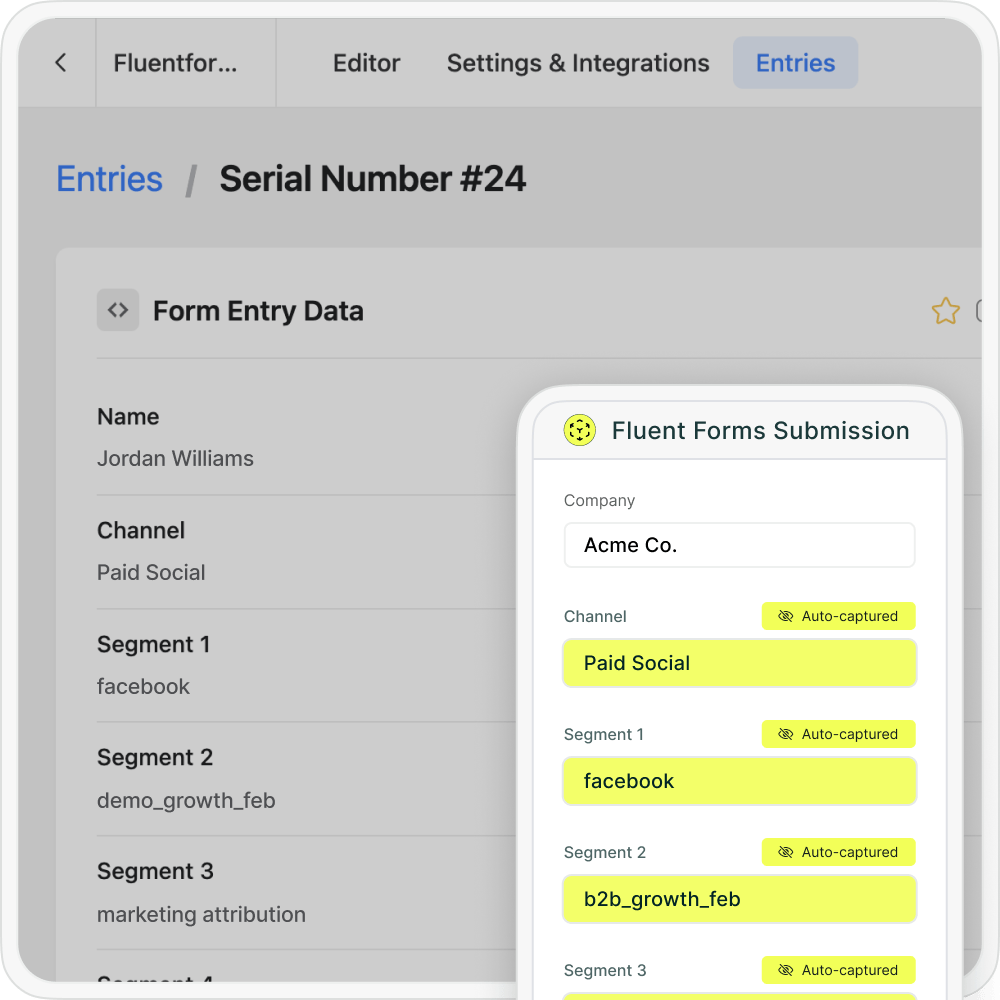
Map the captured fields into matching CRM properties through an available Fluent Forms integration, webhook, or automation.
As those leads progress, use their original campaign attribution alongside lead stages, customer records, and revenue to compare Meta Ads performance. Include campaign spend separately when calculating return on ad spend.
segment1utm_source, such as google.segment2utm_campaign.segment3utm_term, such as the ad group in this guide’s example.segment4utm_content, such as the creative variation.channellplpgClick IDsgclid, when present and corresponding fields are configured.Connect Meta campaign attribution with lead and customer outcomes.
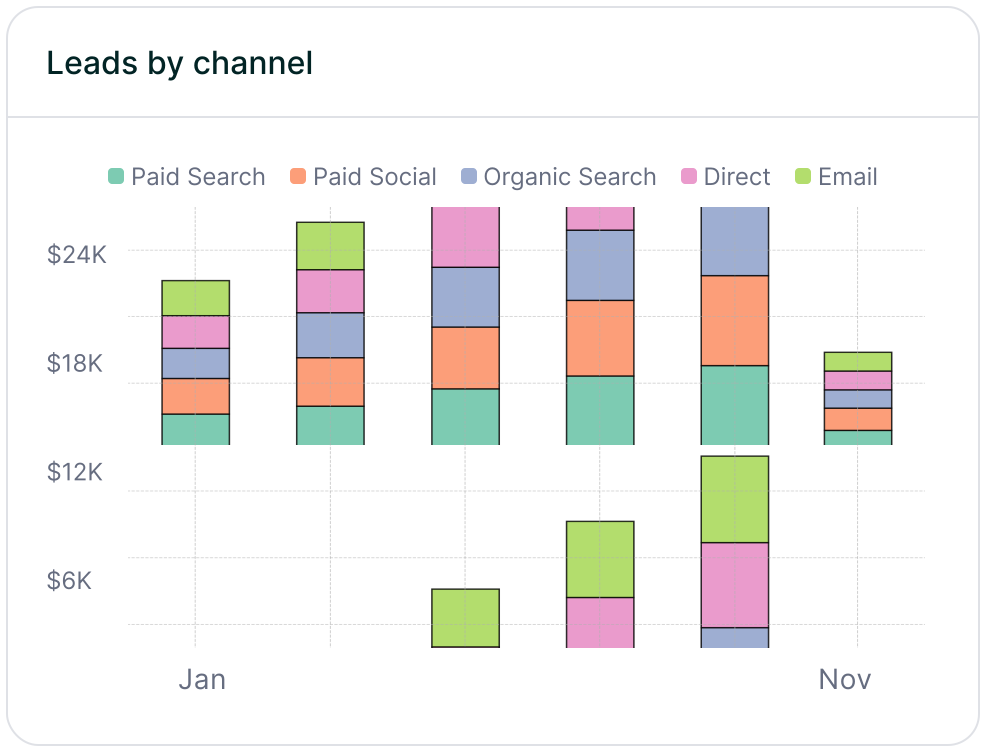
Leads by channel
Compare Paid Social lead generation with other captured marketing channels.
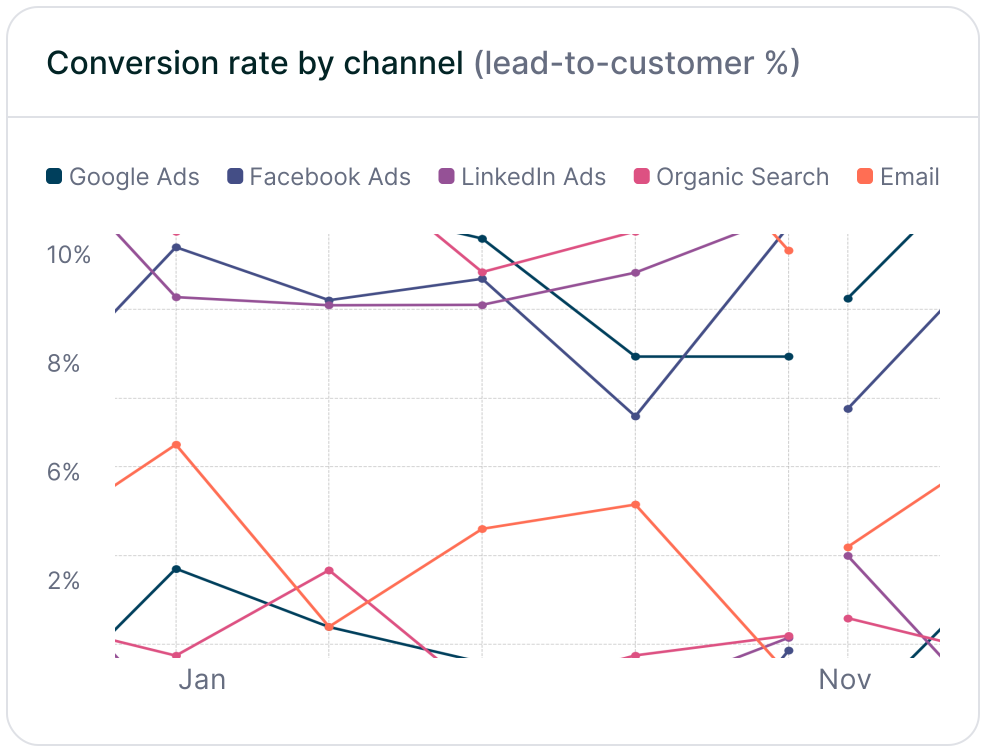
Conversion rate by channel
Use customer records to compare how often leads from each channel become customers.
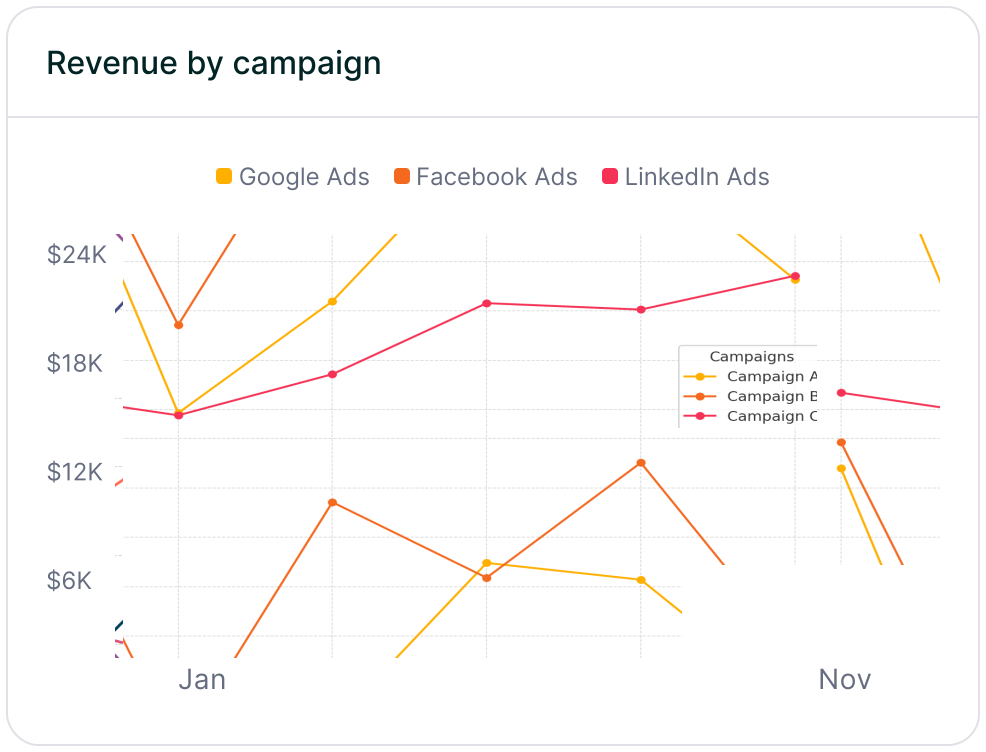
Revenue by campaign
Combine captured Meta campaign values with revenue records to identify the campaigns contributing to growth.
Madlitics brings available original Facebook and Instagram campaign details, landing page data, and configured click IDs into Fluent Forms submissions. View that context alongside contact information, then map it into your CRM to connect campaigns with qualified leads, customers, and revenue.
See which campaigns drive real business results.
Capture campaign details
Record the Facebook or Instagram source and campaign values supplied through your tracking parameters.
Compare ad sets and creatives
Capture tagged ad set and creative values to compare the leads associated with different targeting and messaging.
Preserve first-touch attribution
Retain original campaign context as visitors browse and return, while the saved attribution remains in the browser.
Landing page insights
Record the original landing page URL and group to compare the entry pages associated with leads and customers.
Answers about Facebook and Instagram attribution in Fluent Forms