Digital Marketing
How to Capture Google Ads Data in Gravity Forms
Connect original Google Ads campaign data to your Gravity Forms leads, then follow their progress into customers and revenue inside your CRM.
Google Ads brings visitors to your website, but understanding which campaigns generate customers requires connecting those visits to the leads you receive. Someone might click an ad, explore several pages, and return later to submit a Gravity Form. If the original campaign details aren’t preserved, their submission can arrive without the context your team needs to evaluate that ad spend.
Madlitics captures the visitor’s original attribution, preserves it as they browse and return, and writes it into your configured Gravity Forms fields. Campaign details, original landing page information, and available click IDs can then travel alongside the lead into your CRM.
This guide explains how to capture Google Ads data in Gravity Forms and use it to compare lead quality, customers, and revenue by original campaign.
Clicks and form submissions don’t tell you which Google Ads campaigns generate customers. Connecting campaign attribution from Gravity Forms to your CRM reveals how those leads translate into revenue.
This example shows how campaign performance changes when you look beyond traffic.
Google Ads Campaign Performance Based on Traffic Metrics
Based on traffic alone, Display Retargeting looks strongest: it brings the most visitors at the lowest cost per visit. Connecting those visits to leads, customers, and revenue reveals a different picture.
Google Ads Campaign Performance Connected to Leads, Customers, and Revenue
The Attribution Tool campaign generated 17 customers and $126,000 in revenue from $2,600 in ad spend. Display Retargeting brought more visitors and leads, but produced only three customers and $11,000 in revenue.
That translates to approximately $153 in ad spend per customer versus $1,300. Capturing original Google Ads attribution in Gravity Forms and passing it into your CRM helps you identify those differences and allocate budget using customer outcomes.
Tag your ads, configure Madlitics and Gravity Forms, and receive original campaign attribution alongside each lead.
Add consistent UTM parameters to your Google Ads destination links so Madlitics can capture readable campaign details when visitors arrive.
Example campaign URL: https://example.com/demo?utm_source=google&utm_medium=cpc&utm_campaign=demo_requests&utm_term=marketing_teams&utm_content=video_a

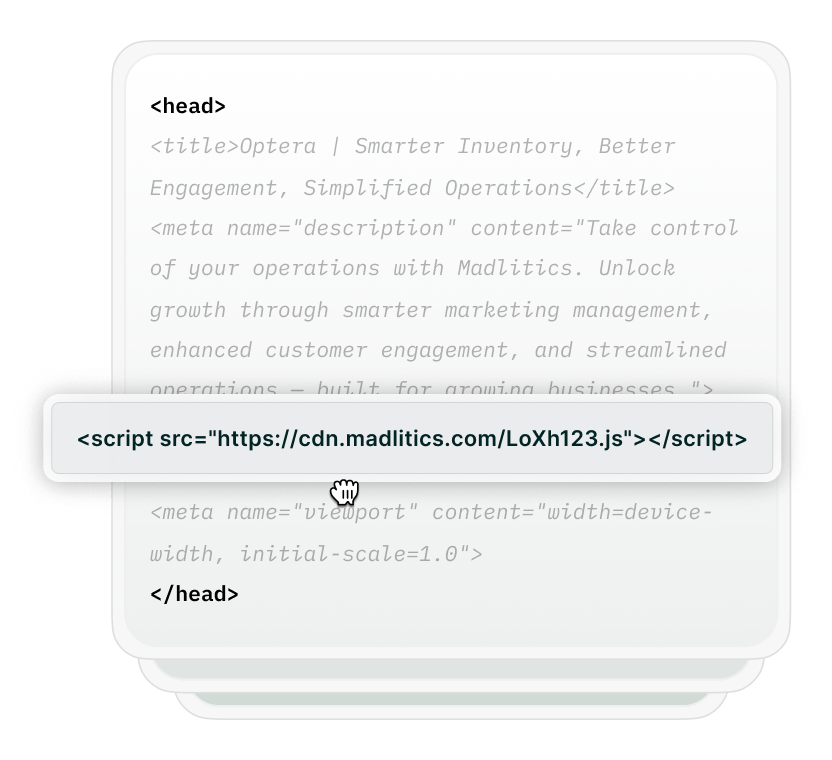
Add the Madlitics script across your website so it captures attribution when visitors first arrive from your ads.
Madlitics preserves the original campaign context as visitors navigate and return, keeping it available when they submit a form on another page.
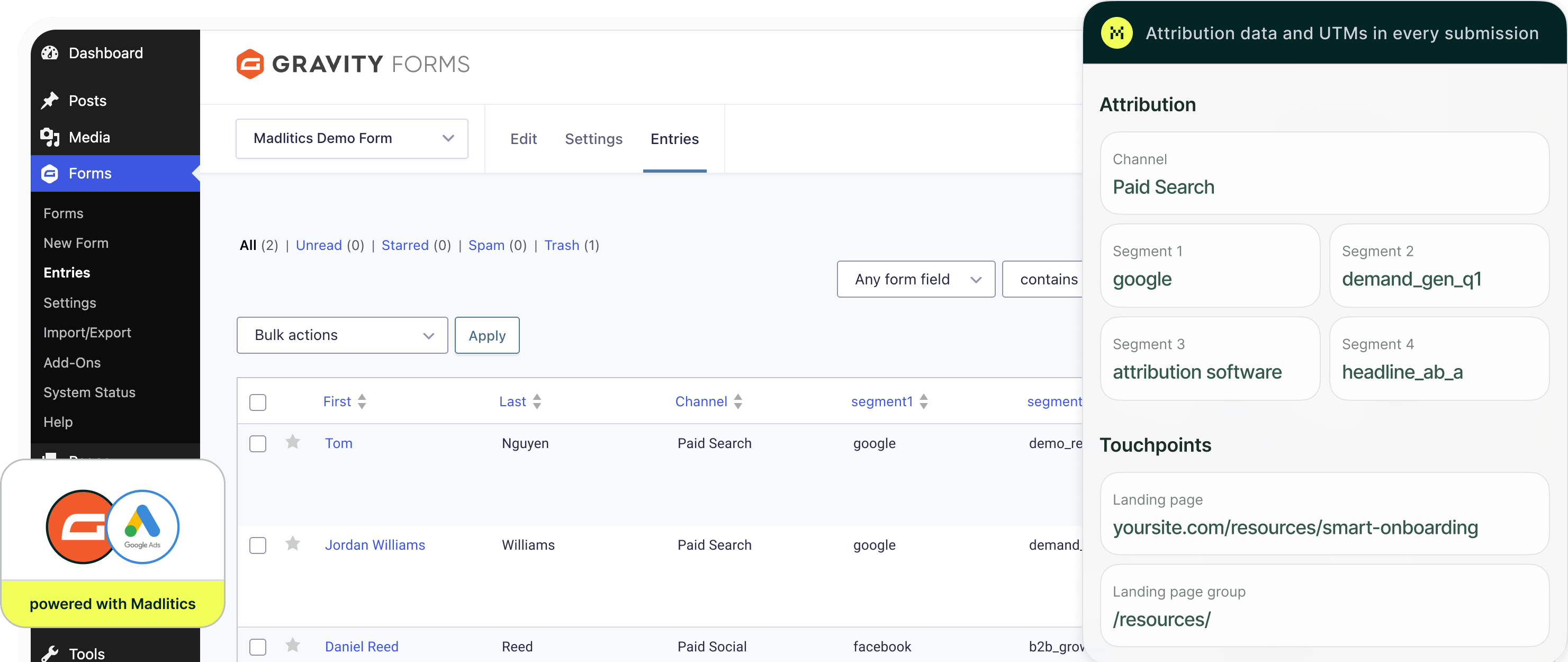
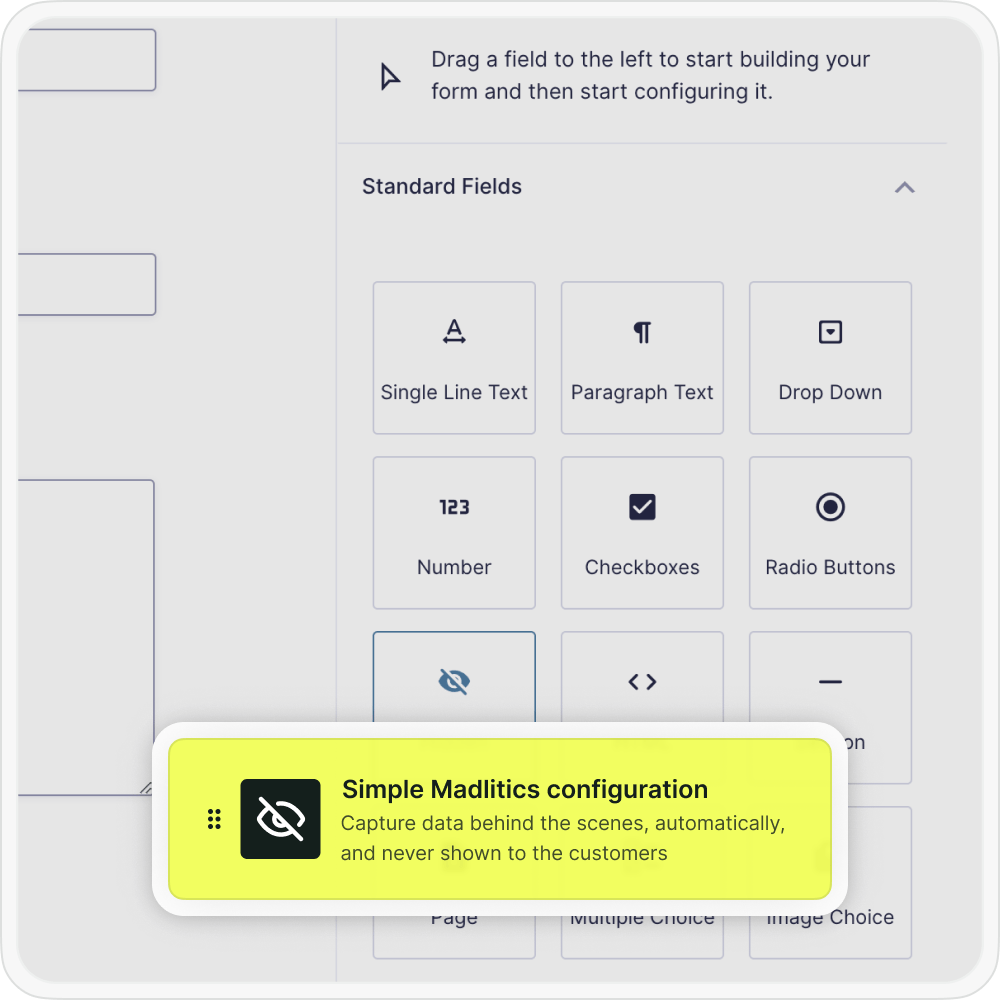
Add the default Madlitics hidden fields to your new or existing Gravity Form. These receive the marketing channel, campaign segments, original landing page, and landing page group without adding questions for visitors to complete.
For tagged campaigns, Segment 1 records utm_source, Segment 2 records utm_campaign, Segment 3 records utm_term, and Segment 4 records utm_content. Configure additional fields if you want to include supported click IDs such as gclid.
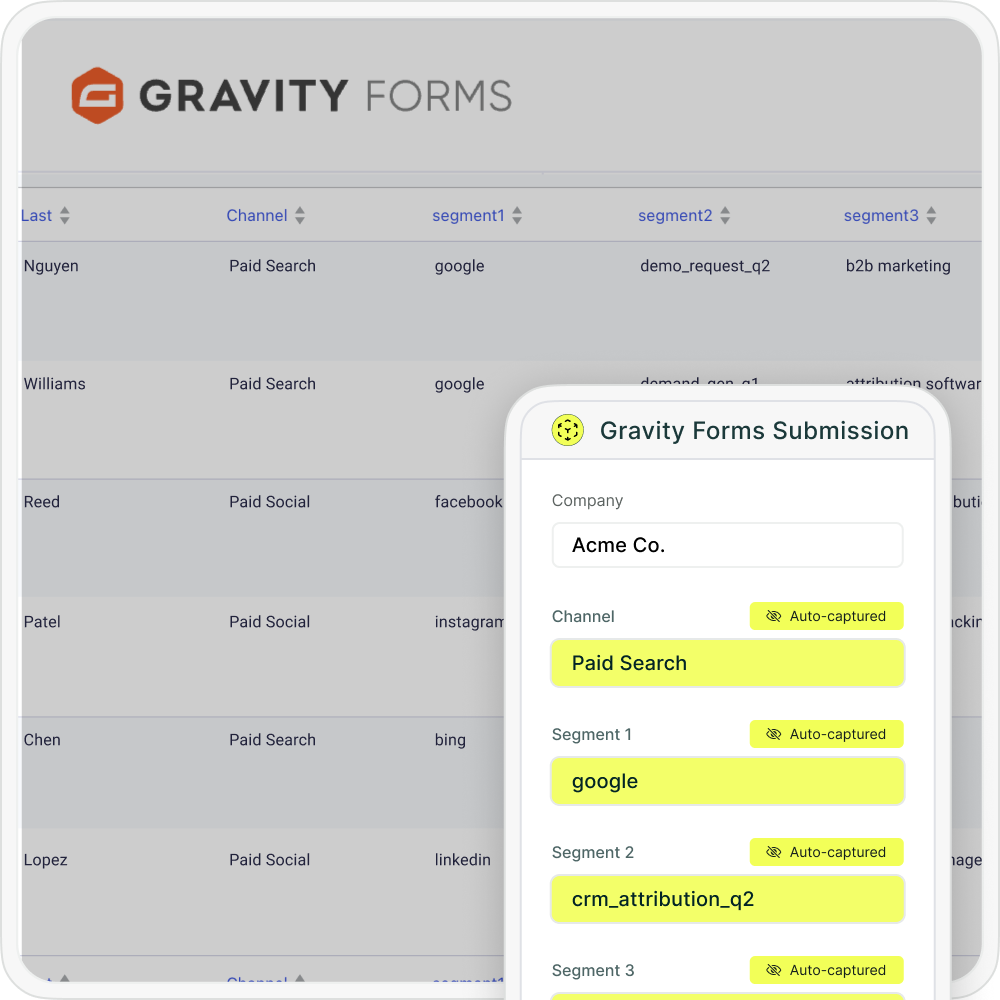
When a visitor submits, Madlitics populates the configured fields with their saved attribution. Open Forms → Entries to see the original campaign details alongside their contact information.
Map those fields into your CRM through your Gravity Forms integration, webhook, or automation workflow. As leads become opportunities and customers, their original campaign attribution remains available for reporting in the connected system.
Connect captured campaign data to your CRM records to compare which Google Ads campaigns bring qualified leads, customers, and revenue.
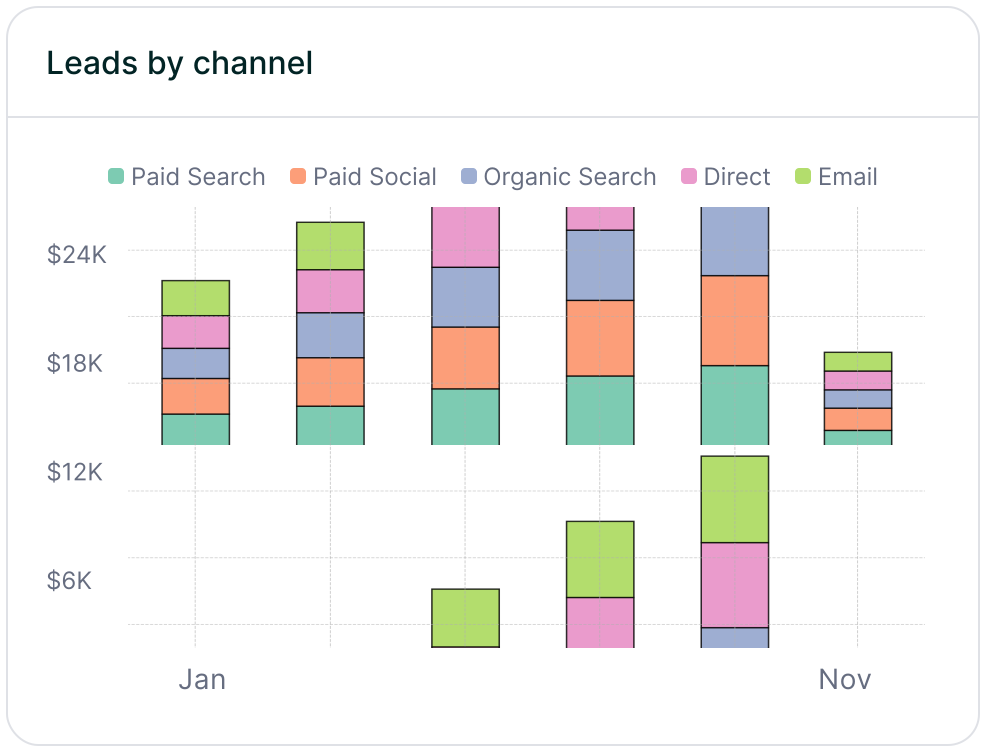
Leads by channel
Compare lead generation across Paid Search, Paid Social, Organic Search, Email, Referral, and Direct traffic to understand how Google Ads contributes to overall pipeline generation alongside other marketing channels.
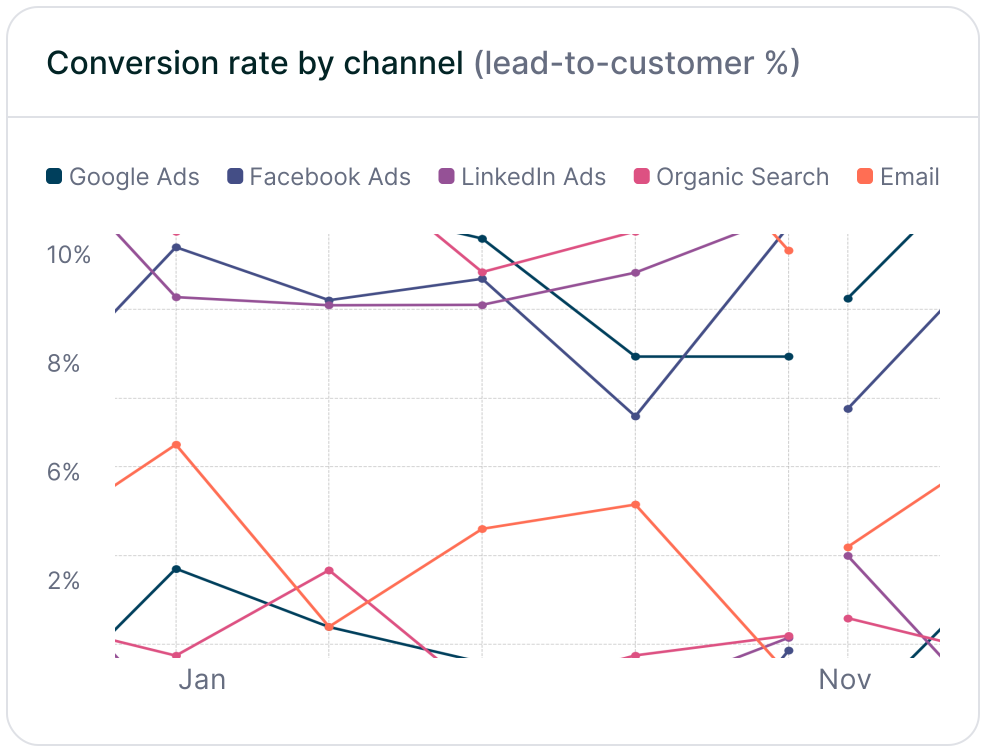
Conversion rate by channel
Measure which traffic sources convert leads into paying customers most effectively. Some channels may generate high lead volume but low conversion quality, while others consistently produce higher-value customers and stronger revenue performance.
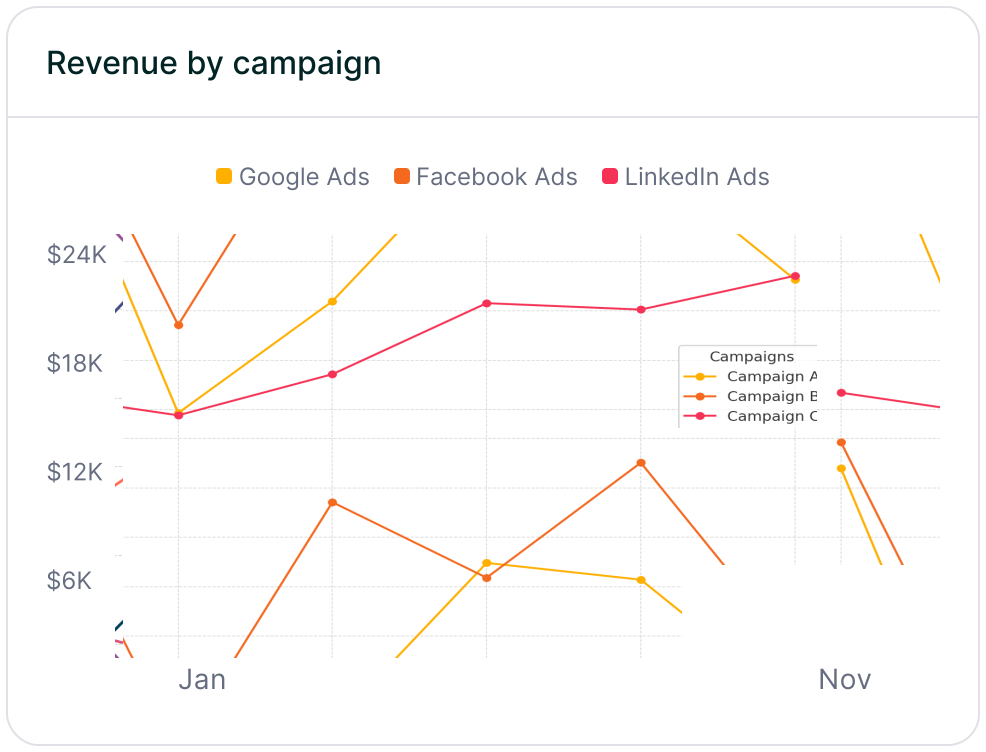
Revenue by campaign
Connect attribution data to customer and revenue outcomes to identify which Google Ads campaigns are driving actual business growth to optimize budget allocation, scale high-performing campaigns, and identify underperforming spend.
Keep original Google Ads campaign details alongside your leads, from Gravity Forms submission through to reporting in your CRM.
Follow the Gravity Forms setup guide to configure your fields, or explore UTM tracking in Gravity Forms for parameter mapping and tagging examples.
See which campaigns drive real business results.
Revenue-focused reporting
Create reports showing which campaigns generate leads, customers, and revenue beyond traffic metrics.
Send data to your tools
Pass campaign and landing page data into ActiveCampaign, HubSpot, Zoho and existing workflows automatically.
Landing page conversion
Identify which landing pages, offers, and content generate the highest-quality leads and customers.
Persistent session data
Keep attribution attached to the lead even when visitors browse multiple pages or convert later.
Answers to common questions about Google Ads tracking with Madlitics and Gravity Forms