How Persistent Tracking Improves Attribution


Persistent tracking fixes a common marketing problem: losing data about how leads find you. When customer journeys involve multiple steps over days or weeks, traditional tracking tools often mislabel conversions as "Direct" or "Unknown." This creates confusion, wastes ad budgets, and makes it hard to know which campaigns are working.
Persistent tracking solves this by storing attribution data - like UTM parameters and ad clicks - from the moment a visitor lands on your site. It keeps this information intact across sessions, pages, and return visits, ensuring accurate credit for every conversion. This approach helps marketers:
With tools like Madlitics, implementing persistent tracking is simple and can save up to 47% of ad spend by eliminating attribution errors. It’s a game-changer for understanding what drives growth in long, complex customer journeys.
Most tracking tools only capture data at the moment a form is submitted. Imagine this: a visitor clicks on a Facebook ad, lands on your homepage, explores your blog, and finally submits a form on your pricing page - several days later. By the time they complete the form, the original Facebook ad source is gone. Why? Session-based tracking only looks at the current page URL, meaning the UTM parameters from that first ad are wiped out as the visitor navigates between pages or starts a new session. This erases the original campaign data, leaving most leads with incomplete source information. Marketing insights suffer from what Madlitics refers to as a “black hole” in your data. Without this critical information, making informed decisions becomes a guessing game.
When attribution data is incomplete, marketers are left juggling conflicting reports. Ad platforms often give credit to the last interaction, while your CRM might show leads with vague or missing source tags. This mismatch skews ROI calculations and leads to poor budget decisions.
For example, early-stage channels like content marketing or organic social might get overlooked because their contributions to initial awareness aren't fully tracked. On the flip side, bottom-funnel tactics like retargeting often take too much credit simply because they represent the final touchpoint before conversion. Ad platforms are inherently designed to claim credit for conversions rather than provide a neutral view of performance. This imbalance can lead teams to underinvest in channels that are actually driving long-term results.
Today’s customer journeys are anything but simple. They often include 5 to 10 - or even more - interactions across various channels over days or weeks. For instance, a prospect might first encounter your brand through a LinkedIn post, engage with your content over time, and eventually convert after searching for your brand on Google. Unfortunately, session-based tracking treats each of these interactions as isolated events.
This disconnection means the initial LinkedIn ad that sparked interest might get no recognition, while the final Google search appears to be the sole driver of the conversion. The result? A fragmented view of your marketing efforts. And when 70% to 90% of B2B conversions involve multiple touchpoints, understanding which channels truly contribute to revenue becomes nearly impossible.
Persistent tracking is a way to capture and store attribution data from the moment a visitor lands on your website. What makes it stand out is its ability to retain this information across multiple pages, sessions, and even return visits. Instead of just relying on the data from the current page URL, it uses long-lasting identifiers - like cookies or unique visitor IDs - to keep track of the original marketing source, sometimes for weeks or even months.
Think of it as your website's long-term memory. For instance, when someone clicks on an ad and lands on your homepage, persistent tracking immediately records that source, along with campaign details and UTM parameters. If that same person leaves and comes back later through a different channel, the system still remembers the original ad. This ensures your CRM gets accurate attribution data, instead of misclassifying the lead as "Direct" or "Organic Search."
This process provides the backbone for a reliable, long-term attribution system.
When a visitor arrives at your site, a tracking script identifies where they came from - whether that's paid search, organic social, referral links, or email campaigns. It then stores this information in a first-party cookie or local storage, sometimes for up to 365 days. This ensures that even during long B2B sales cycles, the attribution data remains intact.
"A LinkedIn ad click should be attributed correctly - even if the visitor signs up on a different page later." - Madlitics
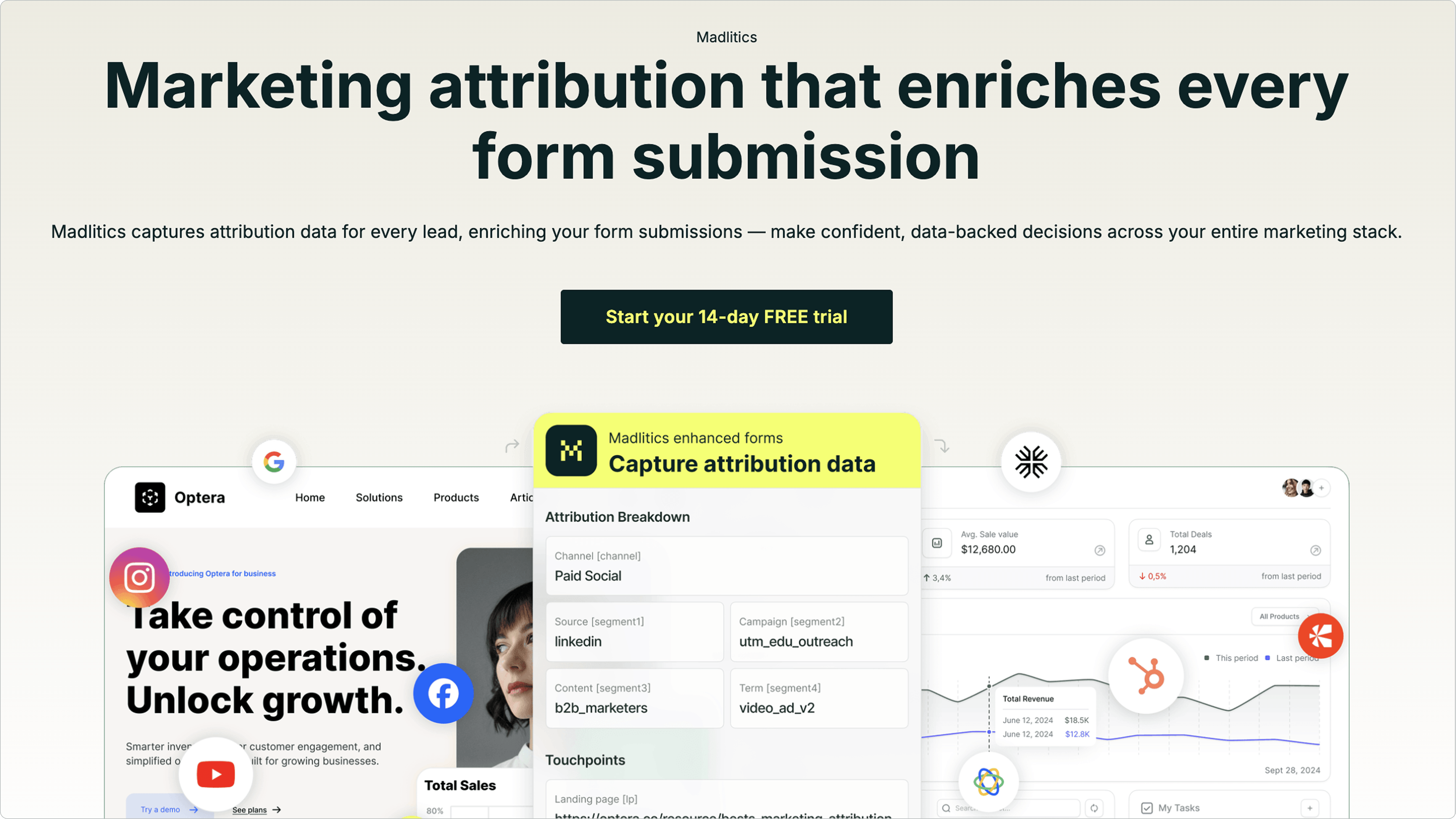
The data stored can include identifiers like gclid (Google), fbclid (Facebook), and msclkid (Microsoft), which help trace conversions back to specific ad clicks. When a visitor eventually fills out a form, the tracking system pulls this stored data and automatically adds it to hidden form fields. This way, every lead is enriched with a complete record of its marketing journey.
Customer journeys can be long and complex, often involving multiple touchpoints over days or even weeks. Persistent tracking helps prevent the kind of data loss that’s common with session-based systems. Without it, as much as 50% of conversions could be misattributed because the original source data often disappears when a visitor navigates away or starts a new session.
Here’s an example: A prospect clicks on a Facebook ad, browses your blog, then closes their browser. Later, they return by typing your URL directly. In a session-based system, this visit might be labeled as "Direct" traffic. Persistent tracking, however, retrieves the original ad data and correctly attributes the lead to Paid Social. This kind of accuracy can save up to 47% of your ad spend.

Persistent tracking takes the guesswork out of attribution. By ensuring consistent data across all touchpoints, it helps teams make smarter budget decisions and demonstrate ROI more effectively. It shines in three key areas: pinpointing traffic sources, uncovering content performance insights, and refining data quality. Let’s dive into how these benefits come to life.
Traditional attribution tools often depend heavily on UTM parameters, which typically track only paid campaigns. This leaves gaps in understanding traffic from organic search, social platforms, referrals, or direct visits. Persistent tracking, however, captures every visitor interaction, ensuring no touchpoint is overlooked.
Imagine running a multi-channel campaign. Persistent tracking gives you a complete picture of the customer journey, helping you identify which channels drive the most value. This clarity allows for smarter budget shifts toward the most effective platforms.
When you can accurately capture traffic sources, the next step is analyzing how landing pages contribute to conversions. Persistent tracking doesn’t just track where visitors come from - it also retains information about the landing pages that initially caught their attention. This goes beyond counting visits; it reveals how specific content drives results.
"Attribution isn't just about where visitors came from - it's about what convinced them to convert. By capturing landing page data alongside UTM parameters, Madlitics shows you which blog posts, case studies, or pricing pages drive the most revenue." - Madlitics
For example, one B2B software company saw a 20% boost in lead generation after using multi-touch attribution to understand the impact of webinars and whitepapers. These insights helped them fine-tune their content strategy to focus on what resonated most with their audience.
Raw attribution data is often messy - think duplicate UTMs, inconsistent formatting, or typos. These issues can skew reports and lead to poor decisions. Persistent tracking steps in to automatically clean and standardize this data before it even reaches your CRM. The result? A 30–50% reduction in errors and more reliable, real-time dashboards.
Clean data also makes it easier to connect anonymous and known identifiers into unified profiles. This comprehensive view supports accurate multi-touch attribution models and allows teams to act on insights faster.
"Duplicate UTMs and inconsistent formatting break reports and mislead teams. Madlitics cleans and organizes attribution data before sending it to your CRM, giving you accurate insights." - Madlitics

Let’s dive into how persistent tracking stacks up against session-based tracking methods, especially when it comes to retaining and leveraging data over time.
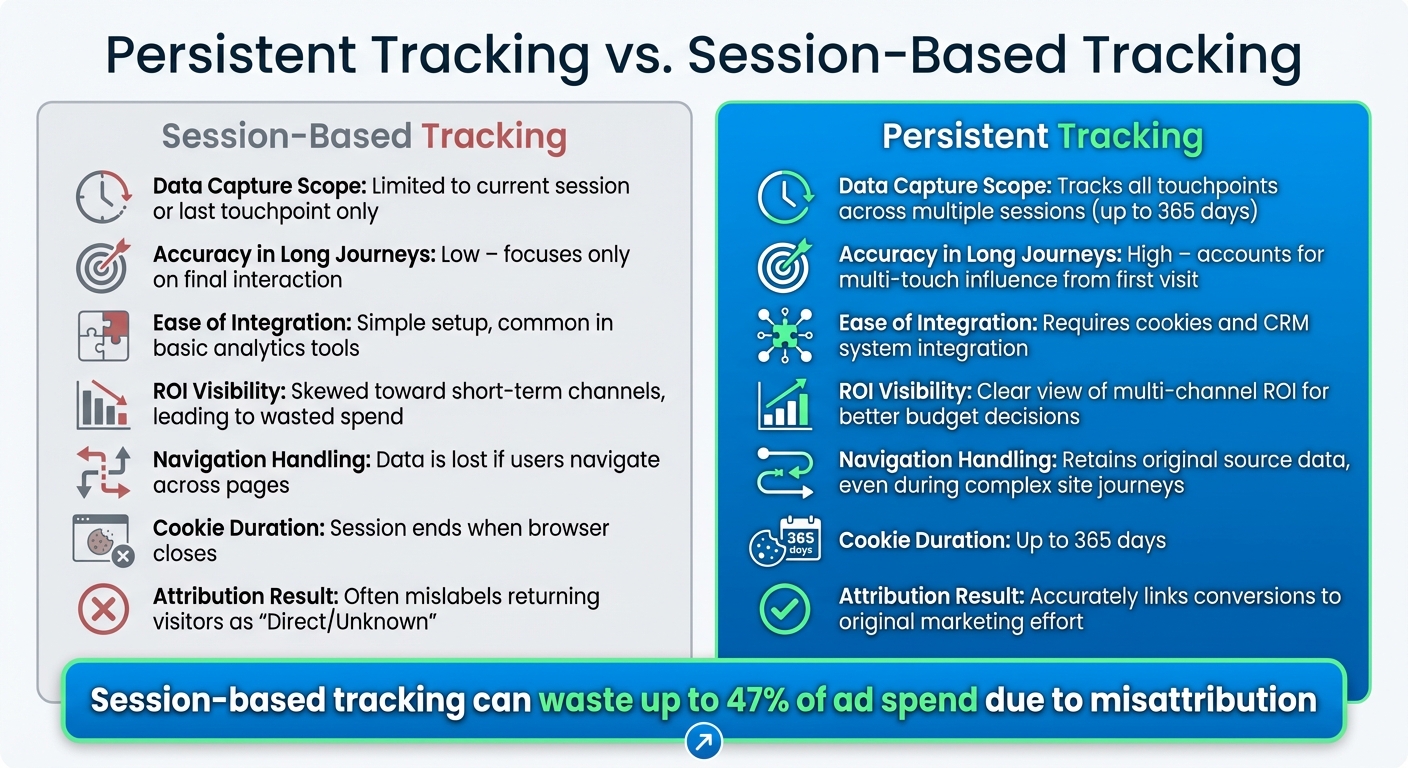
Persistent tracking holds onto data for the long haul, while session-based tracking starts fresh with every new browsing session. Once a session ends - usually when a user closes their browser or leaves the site - session-based tracking forgets everything. Persistent tracking, on the other hand, uses cookies to store attribution data for up to 365 days. This allows it to maintain a detailed record of user interactions, even if those interactions span weeks or months.
Why does this matter? Because not all customers convert immediately. Imagine this: a user clicks on a Facebook ad, browses your site, leaves without buying, and then returns two weeks later via an email campaign to make a purchase. With session-based tracking, the credit for that conversion would likely go to the email campaign, ignoring the Facebook ad that started the journey. Persistent tracking ensures that the initial touchpoint - the Facebook ad - gets the recognition it deserves.
This kind of oversight isn’t minor; it can waste up to 47% of your ad spend.

"Madlitics captures, categorizes, and persists attribution data across sessions, giving you a complete, structured view of what's working in your marketing. Say goodbye to losing attribution when users navigate your site." – Madlitics
Here’s a quick breakdown of the differences:
Session-based tracking often mislabels returning visitors as "Direct/Unknown" traffic because it can’t connect them to their original source. Persistent tracking solves this issue, ensuring every conversion is accurately linked to the marketing effort that initiated the customer’s journey.

Here's a quick guide to implementing persistent tracking with Madlitics.
In just under 10 minutes, you can set up persistent tracking. Start by pasting the unique Madlitics code snippet into your website’s <head> section. This activates the tracking engine and sets a 365-day cookie. Next, add six hidden fields - Channel, Platform, Campaign, Ad Group, Creative, and Landing Page - to your conversion forms. This ensures attribution data is automatically captured when forms are submitted. Finally, tag all inbound links with consistent UTM parameters to guarantee clean, accurate data from the very first pageview.
Once you’ve set everything up, Madlitics offers four key features to keep attribution accurate throughout long customer journeys.
Persistent Attribution ensures the original source data sticks, no matter how long it takes for a visitor to convert. For example, if someone clicks a Facebook ad in January but doesn’t convert until March, that conversion will still be attributed to the original Facebook ad - not mislabeled as "Direct" traffic.
Complete Channel Coverage tracks all types of traffic - not just paid campaigns. This includes organic search, organic social, referrals, and even direct visits. Unlike native analytics tools that often focus mainly on paid advertising, Madlitics captures every conversion across your marketing efforts. This means you’ll see the real impact of channels like SEO or word-of-mouth referrals.
Landing Page Insights give you detailed data about which landing pages and content paths drive leads. Instead of just knowing a form was submitted, you’ll know exactly which blog post, case study, or pricing page led to the conversion. This helps you identify high-performing content - like pages that convert at three times the rate of others - so you can focus your efforts on what works best.
Auto-Cleaned Data simplifies your workflow by standardizing marketing data before it reaches your CRM. No more wasting hours on manual cleanup.
Madlitics integrates seamlessly with CRMs like Salesforce and HubSpot, analytics tools like Google Sheets and Looker Studio, and payment platforms like Stripe and Chargebee. This means attribution data flows directly into the tools your team already uses, so there’s no need to learn new interfaces or change your existing processes.
"We needed dependable channel categorization and UTM mapping without rewiring our stack. Madlitics delivered exactly that. It's now standard on every form we launch." – Sophie A., Head of Growth, Fintech
With Madlitics, real-time data lets you make quick decisions to optimize campaigns and adjust budgets.
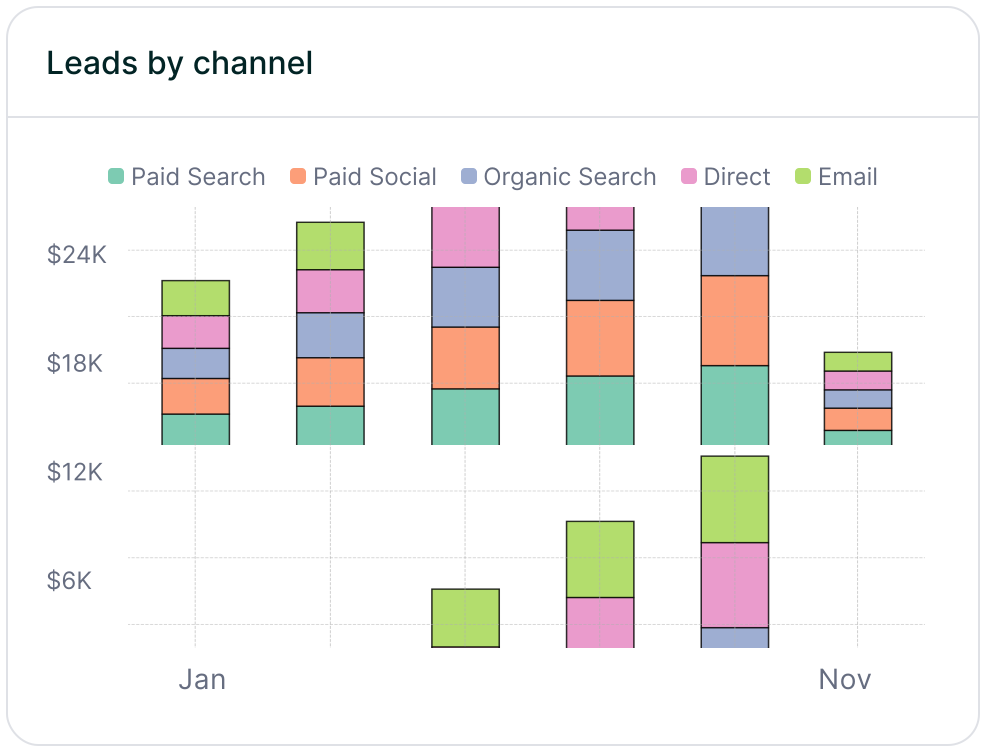
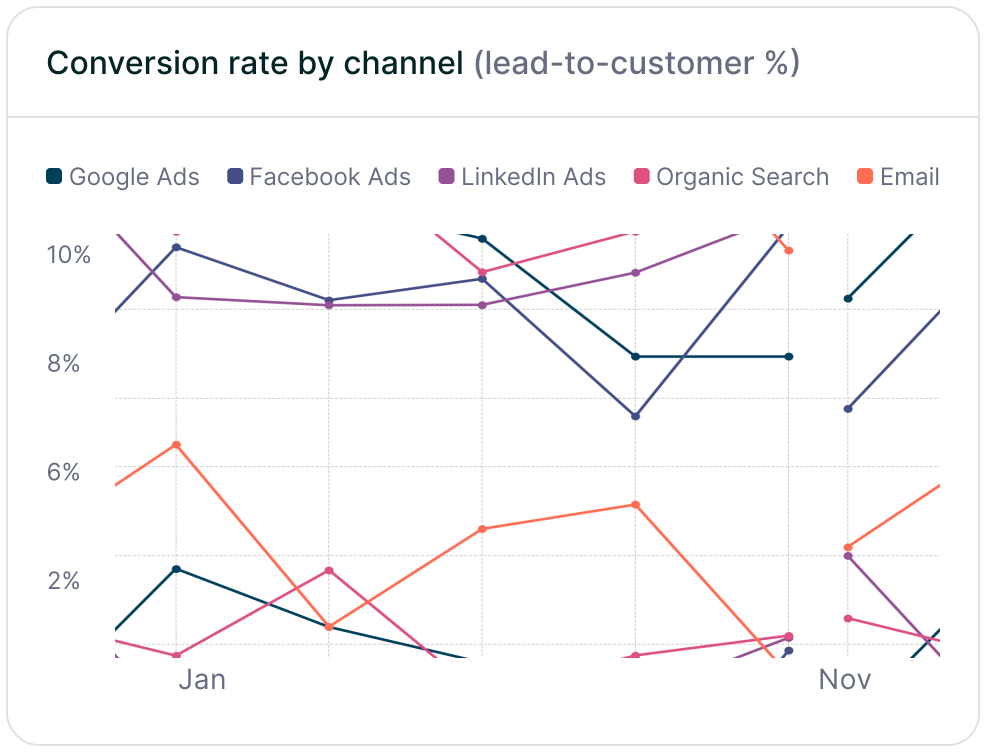
As soon as a form is submitted, you’ll get reports showing which traffic sources, campaigns, and content are generating leads. For example, the "Leads by Channel" report highlights the sources driving the most traffic, so you can shift budgets toward top performers. If LinkedIn ads are bringing in leads at half the cost of Google Ads, you can reallocate funds within hours instead of waiting weeks to find out.
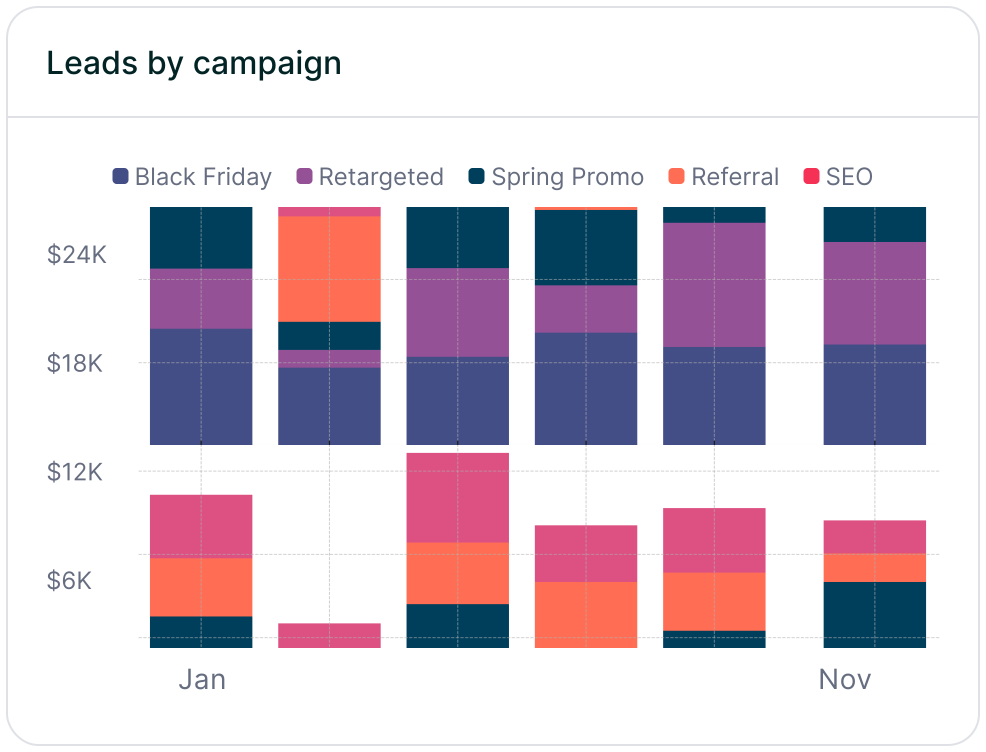
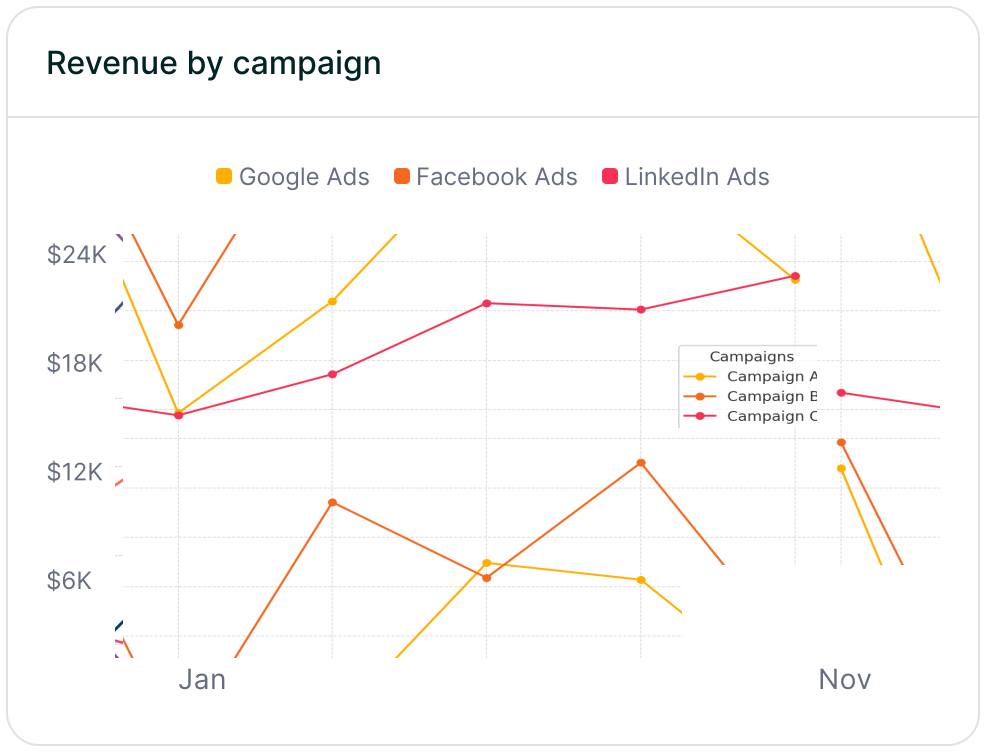
The "Revenue by Campaign" report takes it a step further by linking attribution data to payment tools. This reveals which campaigns are bringing in paying customers and high-value deals - not just filling out forms.
You can also use these insights to scale A/B testing. If one ad creative or landing page is converting at twice the rate of another, you can immediately scale the winner and pause the underperformer. This approach helps teams adapt quickly to market changes and avoid wasting money on underperforming channels.
"It's the first solution my team actually uses every day because the data integrates into your existing tools without additional training." – Sam R., Growth Lead, Tech Startup

https://yoursite.com/?utm_source=linkedin&utm_medium=paidsocial&utm_campaign=q1_promo

Persistent tracking addresses one of the biggest challenges in attribution: losing data across long and complex customer journeys. When users visit multiple pages, return weeks later, or take time to convert, traditional tracking often defaults to "Direct" or loses the original source altogether. By retaining first-touch data for up to 365 days, persistent tracking ensures you can accurately trace which Facebook ad, email campaign, or blog post first brought a lead to your brand.
With this level of data accuracy, you can make smarter, faster decisions. Instead of guessing which channels are driving revenue, you’ll have clean, reliable data that credits every traffic source - from organic search to paid ads, social referrals, and direct visits. This clarity allows you to confidently reallocate budgets, double down on campaigns that perform well, and avoid wasting money on channels that appear effective in dashboards but fail to deliver conversions. Some marketers have even reported reducing wasted ad spend by tackling up to a 47% loss caused by flawed attribution models. This streamlined approach turns your data into actionable insights, making it easier to optimize your strategy.
Madlitics makes implementation straightforward with minimal setup. The data integrates seamlessly into your CRM and analytics tools, so you get valuable insights without needing to change your workflows or learn new dashboards.
Find out which channels truly drive growth. Start your 14-day free trial of Madlitics - no credit card required. Install the tracking snippet today and gain a full picture of where your best leads come from, so you can invest wisely and leave the guesswork behind.