Digital Marketing
How to Capture Microsoft Ads Data in HubSpot
Connect Microsoft Ads campaign data with HubSpot contacts to see which campaigns generate qualified leads, customers, and revenue.

Madlitics connects Microsoft Ads attribution with customer records inside HubSpot.
A visitor clicks your Bing search ad, explores your website, and returns later to request a demo. Preserving the original campaign, ad group, creative, and landing page details gives you the context to evaluate that lead as it progresses through your pipeline.
Madlitics captures the available attribution when the visitor arrives and writes it into configured HubSpot form fields at submission. Those values reach the contact record alongside the lead’s details, helping you connect Microsoft Advertising campaigns with customer outcomes.
Traffic metrics show how efficiently campaigns attract visitors. Connecting attribution with HubSpot customer records shows which campaigns contribute to customers and revenue.
Microsoft Ads Campaign Performance Based on Traffic Metrics
Search Retargeting generates the most visitors at the lowest cost per visit. Adding leads, customers, and revenue reveals a different performance picture.
Microsoft Ads Campaign Performance Connected to Leads, Customers, and Revenue
In this example, Search Retargeting generates 201 leads but only three customers and $11,000 in revenue. Demo Requests generates fewer leads yet produces 17 customers and $126,000.
Its lead-to-customer conversion rate is approximately 14.0%, compared with 1.5% for Search Retargeting. Connecting campaign data with customer outcomes gives marketers a stronger basis for allocating budget.
Capture original campaign context and keep it alongside your HubSpot contacts.
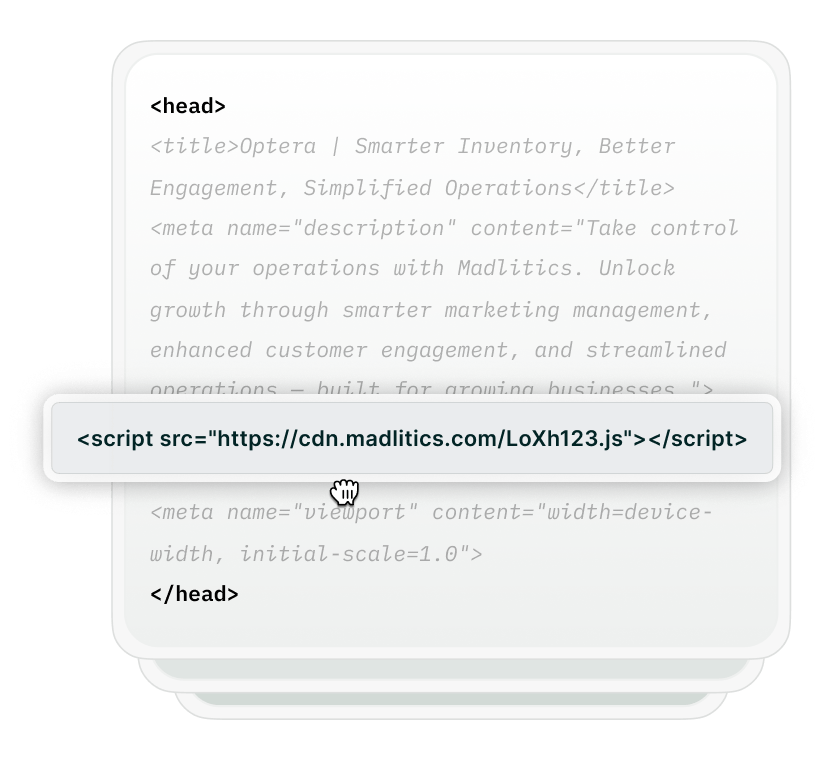
Add your Madlitics snippet to your website so it captures attribution when visitors arrive from Microsoft Ads and preserves it as they browse and return.

Add consistent UTM parameters to your ad destination URLs. Include the campaign, ad group, and creative details you want to compare in HubSpot.
https://yoursite.com/demo?utm_source=bing&utm_medium=cpc&utm_campaign=demo_requests&utm_term=marketing_crm&utm_content=search_ad_a
In this Bing search example, marketing_crm identifies the ad group and search_ad_a identifies the creative variation.
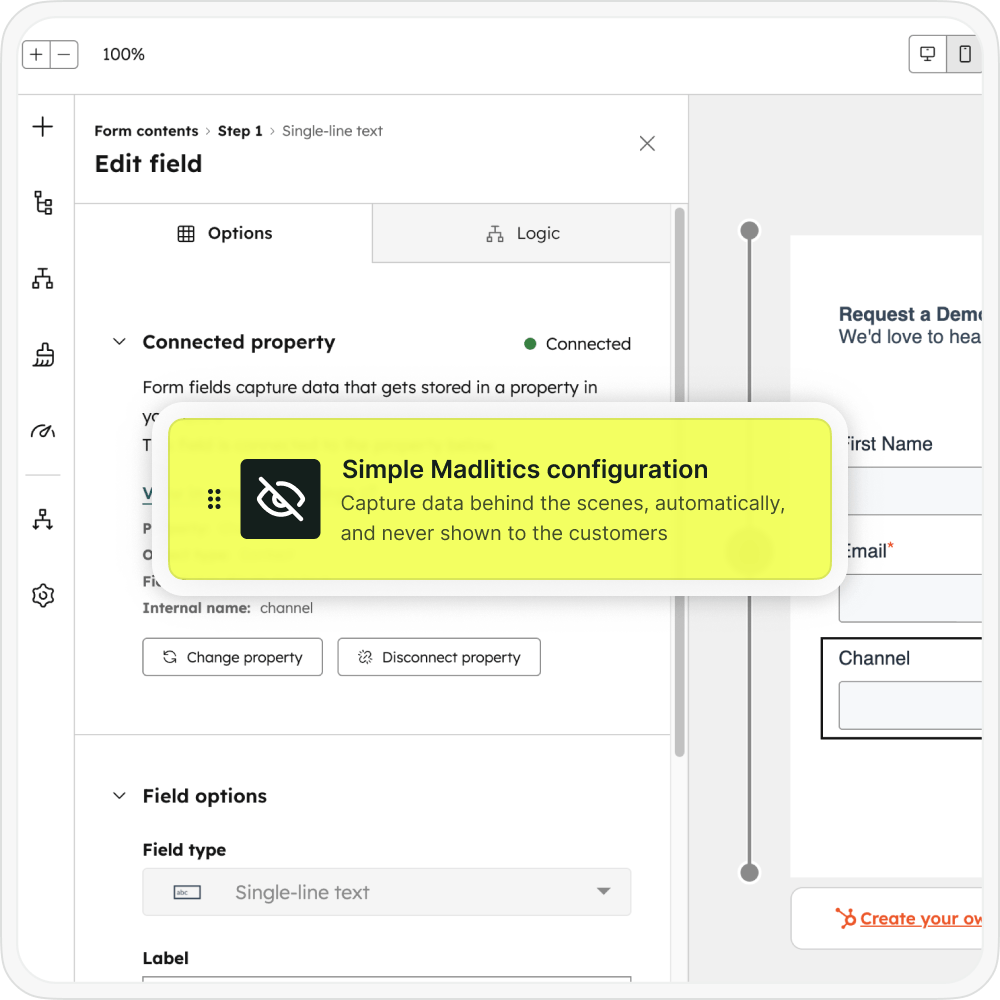
Add Madlitics hidden fields to your HubSpot forms and connect them to your contact properties. Each submission then carries the visitor’s original channel, Microsoft Ads campaign details, and landing page data into HubSpot alongside their contact information.
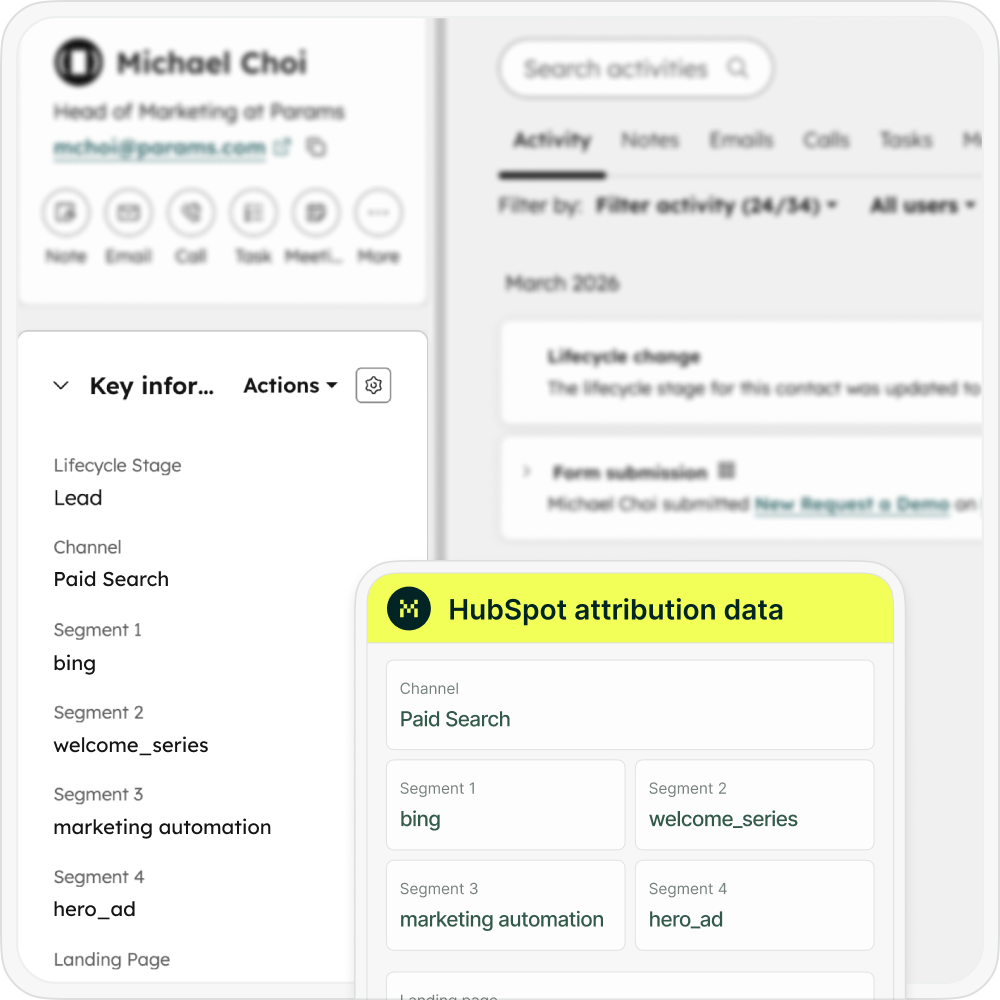
Use the captured campaign properties to compare which Microsoft Ads campaigns generate qualified leads, opportunities, and customers.
Connect those contacts with associated deals and revenue to evaluate campaign performance inside HubSpot and guide your marketing investment.
Use attribution captured on contacts to compare acquisition channels, customer conversion rates, and campaign revenue.

Leads by channel
Compare Microsoft Ads lead generation with other paid and organic acquisition channels.

Conversion rate by channel
See which acquisition channels produce leads that become customers.

Revenue by campaign
Compare closed-won revenue associated with your Microsoft Ads campaigns.
Keep the original campaign context alongside your customer records. Madlitics captures campaign and landing page data through your configured forms, helping you see which Microsoft Ads campaigns contribute to leads, customers, and revenue.
Start a free Madlitics trial and connect campaign attribution to the tools you already use.
See which campaigns drive real business results.
Campaign insights
See which Microsoft Ads campaigns, ad groups, and creative variations generate qualified leads.
First-touch attribution
Preserve the original campaign context as visitors browse and return.
Landing page insights
Compare the original entry pages and content groups behind your Microsoft Ads leads.
Enriched HubSpot contacts
Keep attribution alongside contact details for segmentation, workflows, and reporting.
Answers to common questions about Microsoft Ads tracking with Madlitics and HubSpot