
UTM Guide
How to capture UTM Parameters in Custom HTML Forms
Turn Custom HTML Forms responses into full attribution records ready for your marketing tools, and see what drives leads, not just form fills.
Start a free trial
Custom HTML forms give you full control, but capturing reliable UTM parameters for attribution is still a persistent challenge for marketers. UTMs live in the URL, and unless you intentionally store them and pass them through on submit, they disappear the moment a visitor clicks to another page, returns later, or converts after a multi-step journey. In practice, UTM values show up on only a small fraction of form submissions, while most entries arrive with blank or incomplete campaign fields—making it hard to see which efforts are actually driving results.
Madlitics solves this by persisting first-touch attribution data on the first visit, then automatically filling your form’s hidden inputs at submit time—UTMs, referrers, landing page data, and click IDs included. Instead of maintaining brittle scripts and one-off form logic, you get clean, consistent attribution on every submission so you can confidently connect marketing activity to outcomes.
Custom HTML forms give you full control, but most setups still miss attribution because nothing is capturing marketing context by default. If you don’t intentionally store UTMs, referrers, and click IDs before submit, your form entries usually arrive without the information you need to understand what drove the lead.
Attribution disappears across pages and sessions
With custom forms, you have to decide which fields to capture, create the inputs, and make sure the values are filled at the right time. If inputs aren’t present (or the name attributes don’t match what your backend expects), attribution fields silently fail — so submissions look clean, but the source data is missing.
No built-in attribution pattern
With custom forms, you have to decide which fields to capture, create the hidden inputs, and make sure the values are filled at the right time. If hidden inputs aren’t present (or the name attributes don’t match what your backend expects), attribution fields silently fail—so submissions look clean, but the source data is missing.
UTM-only capture misses organic and referral context
Even when UTMs are present, they only tell part of the story. A lot of your best traffic won’t be tagged at all so organic search, social, and other non-paid channels get undercounted or mislabeled. Without referrer-based classification, those leads get lumped into “unknown,” and you end up undercounting the channels that are actually driving results.
Click IDs get dropped before conversion
Paid traffic often depends on click IDs (gclid, msclkid, fbclid) for clean matching. But click IDs live in the URL, and they’re easy to lose in multi-page journeys, redirects, and return visits. If you don’t persist them, you can’t reliably tie leads back to paid efforts later.
A consistent, unbiased source of truth is hard to maintain
Most teams end up patching attribution downstream—spreadsheets, manual rules, or “best guess” reporting. Madlitics creates a consistent, first-party view of how visitors arrived before submitting, using the same definitions across channels. That gives you one reliable source of truth you can trust when making budget decisions.
Madlitics adds a persistent attribution layer in front of your Custom HTML Forms so that every submission inherits clean, consistent tracking data — regardless of which page the user converts on.
When a visitor lands on your site, Madlitics captures first-touch information such as channel, source, campaign, medium, keyword or ad content (if available), and landing page details. That data is stored client-side and associated with the visitor’s session and subsequent sessions, so if they move from a campaign landing page to a blog article and then finally to a “Request Demo” Custom HTML Form, the original context is still available.
At submit time, Madlitics injects this normalized attribution data into hidden fields on your Custom HTML Form turning each response into a complete record you can send to your CRM, marketing automation platform, or data warehouse. This means your Custom HTML Forms becomes a reliable capture mechanism instead of a dead end for attribution.
Follow these 4 steps to capture full attribution on every Custom HTML Form submission in under 10 minutes.
?utm_source=google&utm_medium=cpc&utm_campaign=customhtmlforms_guide&utm_term=utm+tracking&utm_content=ad_variation_a <head> (or deploy via GTM). Then add the Madlitics hidden inputs to your custom HTML form. Once those fields exist, Madlitics automatically fills them on every submission—site-wide—so you capture reliable attribution even when visitors browse around or return later.CAAAAABq8ybUF7... www.acme.com/articles/custom-html-forms /articles/ Capturing attribution is just the start—the real value comes from reports that reveal what actually drives pipeline and revenue. With Madlitics enriching every Custom HTML form submission, you replace "Direct/Unknown" black holes with actionable insights that shift budgets, kill underperformers, and double down on winners.
Spot your top channels instantly
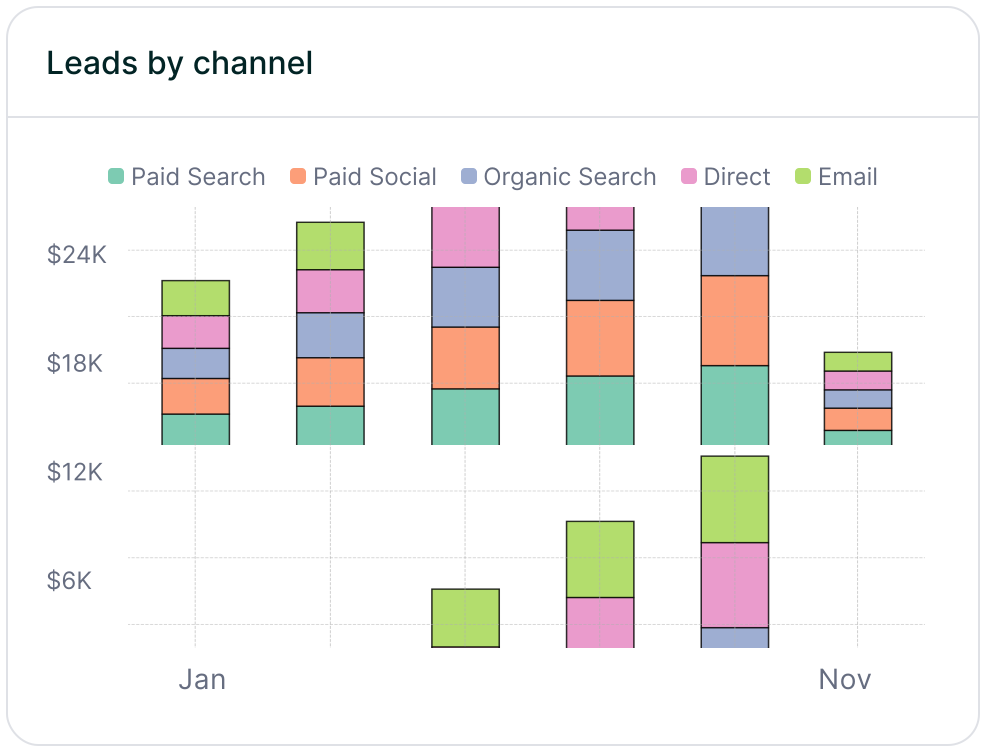
Build leads-by-channel breakdowns to see how Organic Search, Paid Search, Paid Social, and referrals stack up on Custom HTML form conversions. Spot if SEO is quietly crushing paid efforts, then reallocate budget from low performers to scale what's working.
Compare ad networks head-to-head
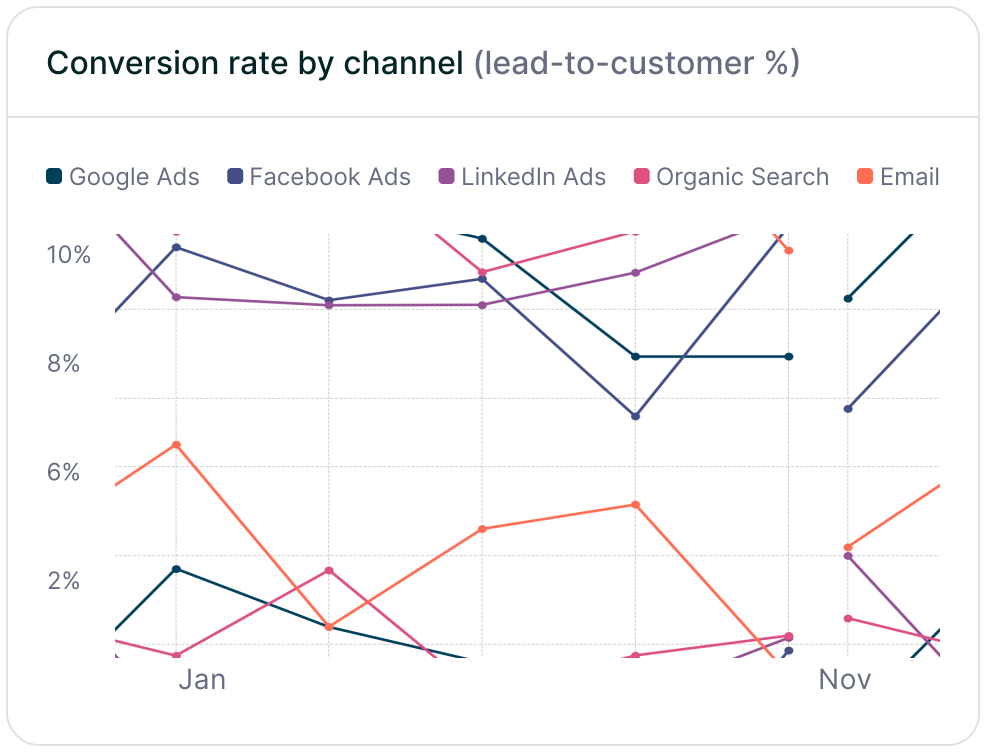
Drill into submissions by network or campaign to benchmark Google vs. Meta vs. LinkedIn performance. Uncover which platforms deliver the lowest CPLs or highest demo-to-customer rates, even for the same form across funnels.
Find campaigns that close (not just click)
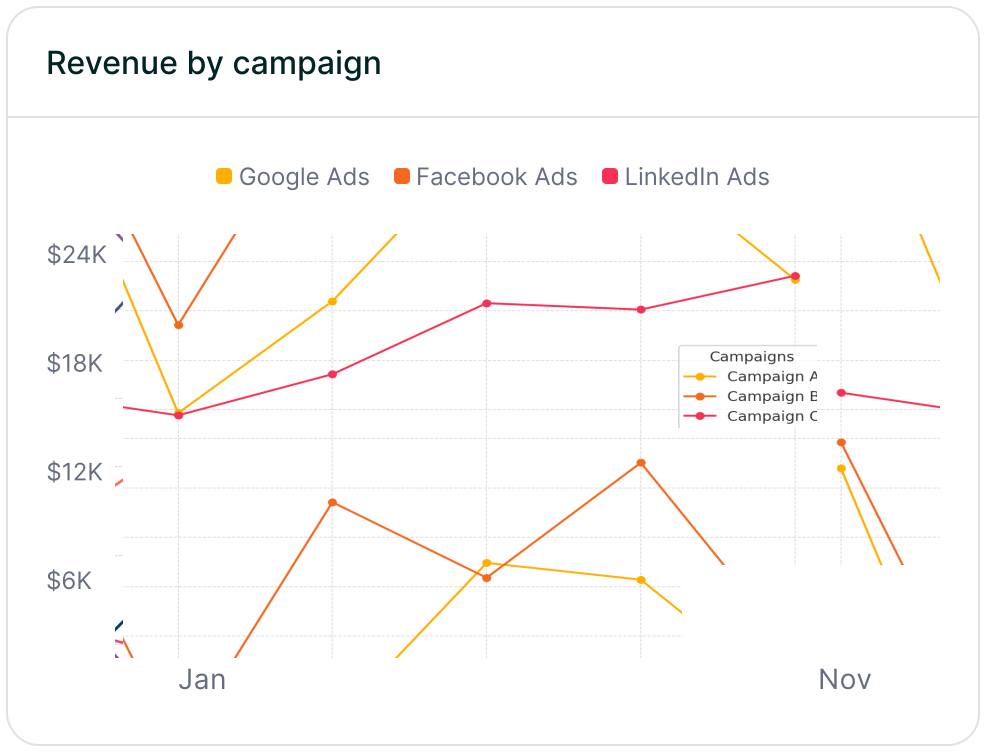
Connect Custom HTML form data to your CRM and track customers + revenue by campaign, keyword, or landing page. Pinpoint which efforts generate cheap form fills but zero pipeline versus the ones quietly producing your highest LTV deals.
Prioritize high-ROI content and keywords
Group by landing page or directory (/blog vs. /features) to measure content performance, or slice revenue by keyword/gclid to bid smarter in ad platforms. Turn Custom HTML form responses into a mirror of your ad account breakdowns — but tied to actual leads and sales.
A Custom HTML Form is a powerful tool for creating engaging, high-converting forms that capture leads across your site, from demos to content upgrades. Its conversational design and embed flexibility make it a go-to for performance marketers chasing better response rates.
Pairing it with Madlitics unlocks even more potential by turning every submission into a full attribution record — persistent channel, campaign, keyword, click ID, and landing page data that flows straight to your CRM. No more "Direct/Unknown" gaps or manual stitching; you get clean insights on what truly drives pipeline and revenue.
Start today with a 4-step setup that takes minutes, then build reports that shift budgets from guesswork to proven winners. This integration makes your Custom HTML Forms a revenue attribution engine for your entire marketing stack.