
Digital Marketing
First-Touch vs Last-Touch Attribution: Key Differences
First-Touch vs Last-Touch Attribution: Key Differences
Start a free trial
When deciding which marketing efforts deserve credit for driving conversions, two common marketing attribution models stand out: First-Touch Attribution and Last-Touch Attribution. Here's what you need to know:
Both models simplify the customer journey by focusing on a single touchpoint, but each has strengths and weaknesses. First-Touch highlights early-stage efforts but ignores later interactions that drive conversions. Last-Touch emphasizes closing sales but overlooks the role of awareness-building campaigns.
First-touch attribution credits the first interaction a person has with your brand. It’s tied to top-of-funnel awareness—things like social, display, or SEO that introduce you to new audiences. It’s great for understanding which channels are opening doors and is especially useful for new audiences and long sales cycles, but it ignores all the nurturing and conversion steps that happen afterward.
Last-touch attribution credits the final interaction before a conversion. It focuses on bottom-of-funnel efforts—paid search, retargeting, emails, and promos that push people over the line. It’s ideal for short sales cycles and measuring immediate ROI, but it ignores all the awareness-building work that made the final touch even possible.
Key takeaway: Use First-Touch for growing awareness and Last-Touch for driving conversions. For a complete view, combine insights from both models.
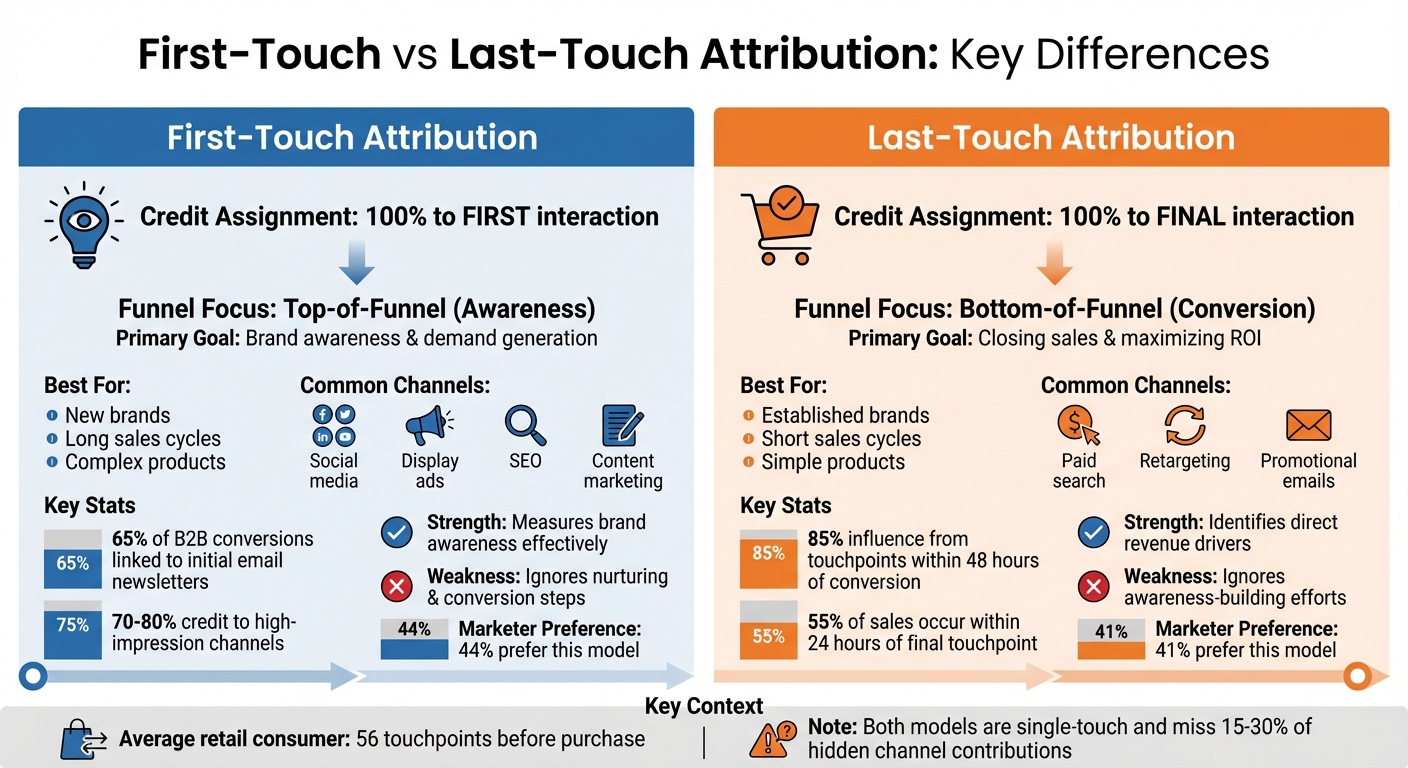
First-touch attribution gives 100% of the credit for a conversion to the very first interaction a customer has with your brand. For example, if someone first discovers your company through a Facebook ad, that ad gets all the credit - even if the customer later engages with emails, website visits, or other channels. This model focuses on the top of the funnel, emphasizing brand awareness and initial discovery.
Here’s how it works: tracking tools like Google Analytics (using "First Interaction"), UTM parameters, or CRM systems identify the first channel that brought the customer in - whether it’s a paid ad, organic search, or social media post - and ignore all later touchpoints. With rising privacy regulations and the decline of cookies, marketers are turning to newer methods like probabilistic modeling and cookieless attribution to track these early interactions.
"First-touch attribution focuses on campaigns that generate brand awareness because customers can't buy from your brand if they don't know it exists." – MNTN Team
In B2B software tracking, historical data shows that 65% of conversions can be linked back to initial email newsletters within a 90-day window. Meanwhile, in the retail sector, analytics reveal that 50% of leads identified through first-touch attribution never move beyond the awareness stage. This highlights the model’s strength in capturing discovery but also its limitation in predicting long-term conversions.
First-touch attribution shines when it comes to measuring brand awareness and justifying spending on top-of-funnel activities. It’s an effective way to evaluate demand generation efforts, content marketing, and paid social campaigns. Businesses with longer sales cycles benefit particularly from this model, as early interactions often play a crucial role in nurturing prospects. For instance, in the fashion retail industry, initial exposure through influencer partnerships has been linked to a 25% increase in customer lifetime value. Early loyalty signals captured through this model can also predict a 25% higher lifetime value.
"First-touch attribution is most valuable when building brand awareness is a key goal." – Michael Cooney, WhatConverts
Another advantage is its simplicity. Tools like Google Analytics include first-touch tracking as a standard feature, making it accessible for businesses of any size. Additionally, first-touch models often allocate 70-80% of credit to high-impression channels, such as display ads. This makes it easier to compare the performance of awareness campaigns, like SEO versus paid social. For companies launching new products or entering new markets, first-touch attribution can help pinpoint which strategies drive initial interest.
The biggest drawback of first-touch attribution is that it ignores all subsequent interactions. Later touchpoints - such as retargeting ads, email campaigns, webinars, or sales calls - get no credit, even though they often play a crucial role in converting prospects. This narrow focus can misrepresent marketing effectiveness, leading to over-crediting initial interactions. For example, social impressions can be overattributed by up to 40%, and seasonal peaks may inflate figures by 12%.
Another issue is the reliance on a 90-day lookback window in tools like Google Analytics. If your sales cycle is longer than three months, mid-funnel interactions might mistakenly be labeled as the "first touch". This is especially problematic for B2B companies with complex, extended buying processes, where multiple touchpoints are involved over time.
Last-touch attribution assigns 100% of the credit for a conversion to the final interaction a customer has with your brand before making a purchase. For example, if someone clicks on a Google Shopping ad and immediately buys a product, that ad gets all the credit - even if they had previously interacted with Facebook ads, read blog posts, or engaged with email campaigns. This model zeroes in on the bottom of the funnel, highlighting the last trigger that led to the conversion.
Tracking codes or pixels capture the channel, campaign, and timestamp of this final interaction, which is then credited when the conversion happens. Platforms like Google Analytics often use this as the default attribution model because it’s straightforward to implement and requires minimal analysis.
"Think of it as the straw-that-broke-the-camel's-back attribution model - it can tell you which of your marketing efforts are tipping customers over the conversion line." – MNTN Team
Interestingly, data reveals that touchpoints within 48 hours of a conversion hold 85% of their influence under last-touch models. For short-cycle purchases, this approach can boost ROI calculations by 30% because it closely mirrors actions tied to revenue. However, in a study of 5,000 financial product inquiries, last-touch models overattributed 60% of conversions to search engines, overlooking the role of earlier educational content. Additionally, users acquired through last-touch-optimized channels tend to have a 15% higher churn rate, indicating this model may favor short-term wins over long-term customer loyalty.
Last-touch attribution is particularly effective at identifying which campaigns directly drive revenue and close deals. It provides performance marketers with clear, actionable insights to optimize bottom-funnel spending. This model works especially well for products with short buying cycles - think impulse purchases, flash sales, or limited-time promotions - where the final click often represents the decisive moment.
"Last-touch attribution gives you a better idea of how your marketing campaigns are influencing purchases. Since it focuses on the bottom-of-the-funnel efforts, it helps you accurately assess which ad campaigns and marketing activities are responsible for conversions." – MNTN Team
Another key advantage is its simplicity. Most analytics tools have last-touch attribution as a default setting, making it easy to implement without needing complex tracking of the entire customer journey. Because the time between the last touch and the sale is typically short, this model also avoids common tracking issues like cookie expiration or cross-device fragmentation. For retargeting campaigns, reminder emails, or time-sensitive promotions, last-touch attribution provides quick insights that help allocate budget to high-performing creatives.
Despite its simplicity, last-touch attribution has a major limitation: it ignores earlier interactions that are often crucial for building customer relationships. Even if a customer interacted with your brand through 15 different channels, only the last one gets credit. This creates a skewed view of marketing performance, often undervaluing efforts like content marketing, social media, and brand-building campaigns that drive top-of-funnel engagement.
"Marketers know that the chance of an individual seeing an ad for new headphones once and then instantly buying them is unlikely. Yet they're happy to assign all credit for a transaction to the last click, which completely negates the value of the other ads the consumer may have been served in the lead up to a purchase. It's a lazy and inadequate means of marketing measurement." – AdExchanger
This narrow focus can lead to overestimating the effectiveness of certain channels, particularly search, by as much as 45% compared to multi-touch attribution models. During seasonal campaigns, this model can misattribute 35% of holiday sales spikes to end-of-cycle promotions, ignoring earlier efforts that built awareness and primed customers to buy. For businesses with longer sales cycles or more complex buying processes, last-touch attribution often misrepresents which channels truly drive conversions, leading to misaligned budgets and missed opportunities. This stands in sharp contrast to the broader perspective offered by first-touch attribution, as discussed earlier.
The core distinction between these two models lies in how they assign credit for a conversion. First-touch attribution awards 100% of the credit to the very first interaction a customer has with your brand. On the other hand, last-touch attribution gives all the credit to the final interaction that directly precedes the purchase or conversion. This fundamental difference significantly influences marketing strategies.
Each model emphasizes different stages of the customer journey. First-touch attribution prioritizes top-of-funnel activities like social media, display advertising, and SEO, which are designed to build awareness and attract attention. Conversely, last-touch attribution focuses on bottom-of-funnel tactics, such as paid search, retargeting, and promotional emails, which are often responsible for closing the sale. For example, first-touch models tend to allocate 70–80% of credit to high-impression channels, while last-touch shows a stronger link to click-through rates, with a correlation coefficient of 0.88 compared to 0.72 for first-touch.
Both models are relatively easy to implement due to their single-touch nature. Many tools, including Google Analytics, Facebook, and Google Ads, default to last-touch attribution, making it a common choice. It’s also seen as more technically reliable because the short time interval between the final interaction and the conversion reduces issues like cookie expiration.
However, there are trade-offs. As Kapil Kumar Sharma, Data Architect at Cisco Systems, explains:
"Last-touch routinely undervalues awareness-building channels and biases the investment toward end-of-funnel tactics/touchpoints. In practice, this can distort strategy and reduce overall pipeline growth."
From a strategic perspective, first-touch attribution encourages investment in broad-reach, brand-building campaigns. Meanwhile, last-touch attribution directs budgets toward tactics that deliver immediate returns on investment (ROI). For instance, in short sales cycles, last-touch can inflate ROI calculations by up to 30%. However, users acquired through last-touch-optimized channels tend to have a 15% higher churn rate. On the flip side, data shows that 50% of leads identified through first-touch attribution never move beyond the awareness stage.
Here’s a side-by-side comparison of the two models:
Choosing the right attribution model depends on your goals - whether you're aiming to attract new audiences or drive immediate conversions. Neither model is inherently "better", as each serves a unique purpose and highlights different aspects of the customer journey. Here's a breakdown of when to use each one effectively.
First-touch attribution is ideal when your focus is on building brand awareness or expanding your audience. It's especially useful for campaigns designed to introduce your brand to new prospects, such as launching a product, entering a new market, or running awareness campaigns. This model pinpoints the channels that are successfully bringing new visitors into your ecosystem.
For B2B companies with longer sales cycles, first-touch attribution highlights the importance of early-stage activities - like SEO, content marketing, or Connected TV (CTV) - that might otherwise get overlooked in models focused on final interactions.
"By using first-touch attribution, analysts can defend and maintain investment in broad-reach channels proven to spark growth." – Anton Malyshev, Co-founder of Stellans
Tools like Madlitics simplify first-touch tracking by capturing and categorizing the source of a visitor's very first interaction with your site, whether it's through organic search, social media, or display ads. Even if the visitor submits a form weeks later, that initial data remains intact and flows into your CRM. This gives you a clear view of which top-of-funnel efforts are generating leads.
A helpful tip: Focus your first-touch data on qualified leads to avoid overestimating the value of high-traffic channels that attract visitors who may not convert. Madlitics helps by organizing and cleaning channel data, making it easier to identify which awareness campaigns are driving meaningful results.
Last-touch attribution, on the other hand, is perfect when your goal is to optimize for conversions and track immediate ROI. This model works best for performance-driven efforts like flash sales, retargeting ads, promotional emails, or free trial offers that encourage quick decisions.
It’s particularly effective in short sales cycles, such as e-commerce or low-cost SaaS products, where customers often make purchasing decisions within hours of their last interaction. In fact, data shows that 55% of sales in such environments occur within 24 hours of the final touchpoint. Established brands often benefit from this model to identify the specific actions that directly lead to conversions.
"Last-touch attribution is a model that gives the conversion credit entirely to the final touchpoint where a lead has converted from." – Diana Ellegaard-Daia, Head of Content Marketing at Accurics
Interestingly, 44% of marketers prefer first-touch attribution, while 41% lean toward last-touch for online campaigns. The best choice ultimately depends on whether you're looking to fill the top of your funnel or maximize bottom-of-funnel conversions.
Here's a breakdown of the two attribution models:
Interestingly, today’s average retail consumer interacts with about 56 touchpoints before making a purchase. This growing complexity is why many marketers are moving away from single-touch attribution models altogether. The comparison above highlights how each approach serves distinct purposes in shaping your marketing strategies.
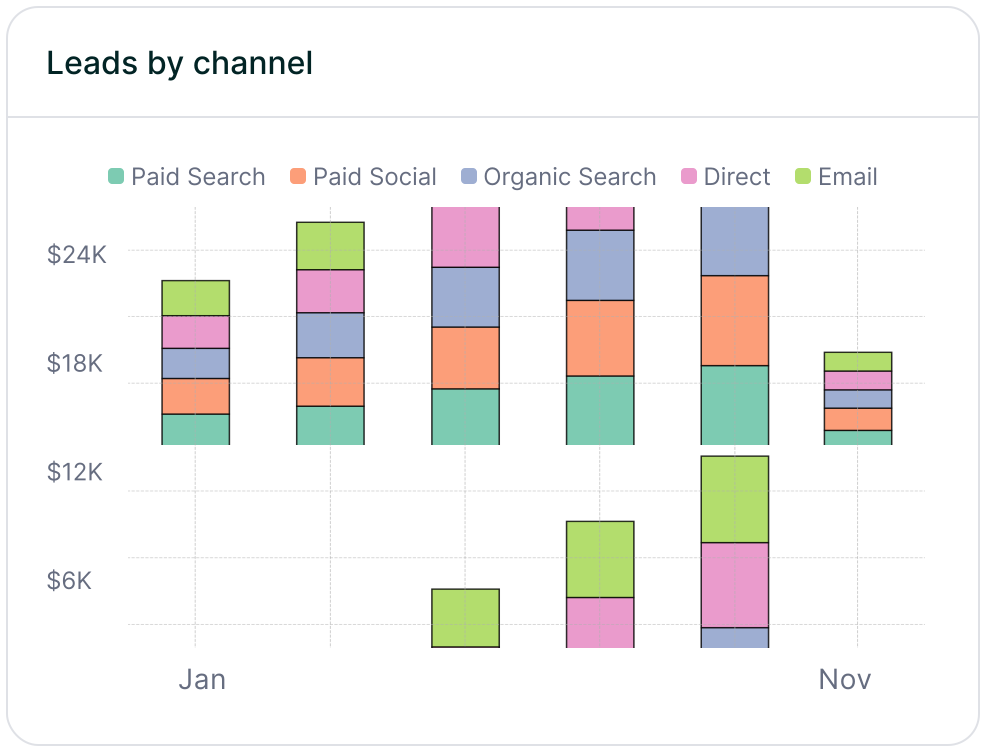
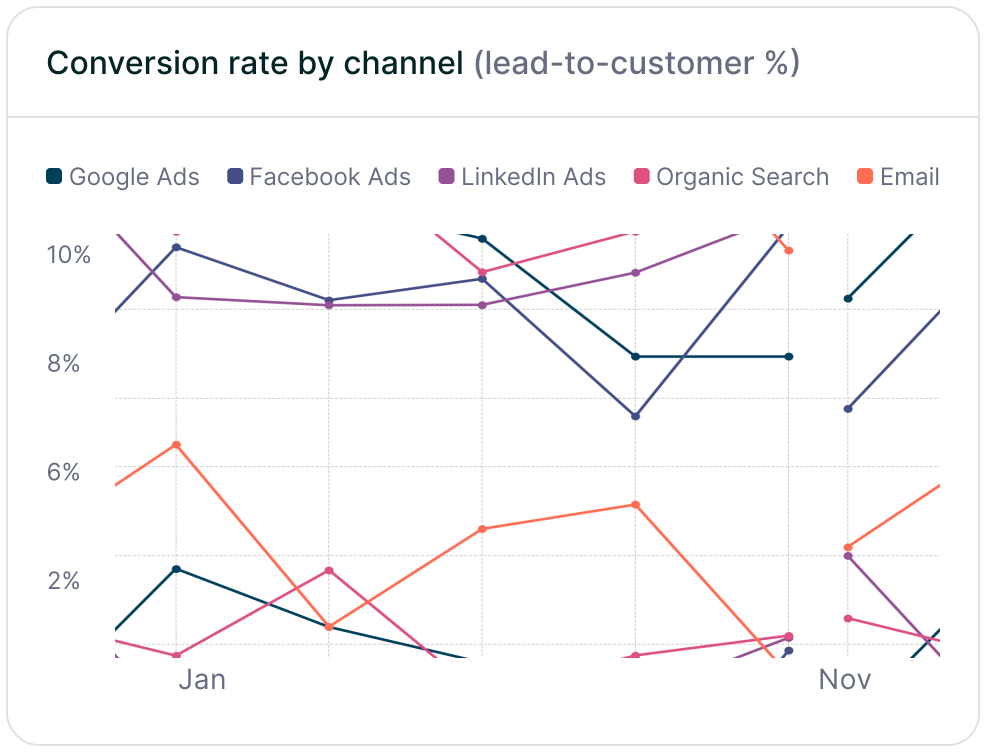
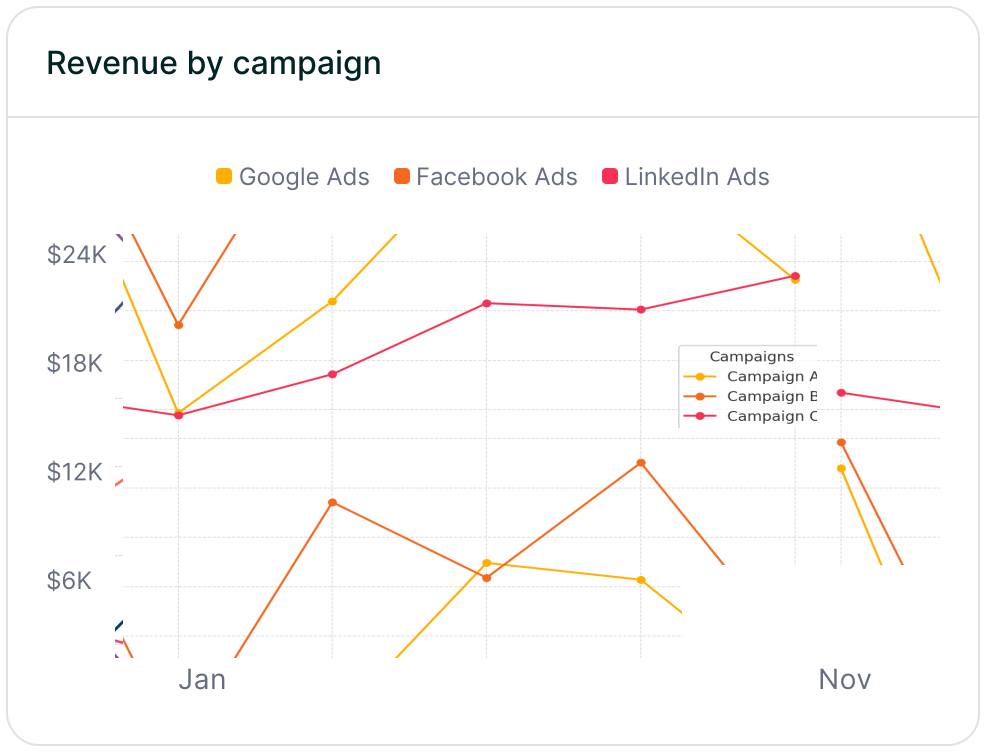
First-touch and last-touch attribution each play distinct roles in shaping your marketing strategy. First-touch is perfect for growing awareness and fueling top-of-funnel campaigns, while last-touch zeroes in on closing sales, making it a natural fit for e-commerce, short sales cycles, and conversion-driven efforts like retargeting or branded PPC.
However, both models come with limitations. First-touch often overemphasizes initial interactions that may not lead to sustained engagement, while last-touch overlooks the critical nurturing process that often spans weeks or months. As Anton Malyshev, Co-founder of Stellans, explains:
"Single-touch attribution assigns all conversion credit to one touchpoint - either the first or the last - making it easy to implement but prone to major blind spots".
This narrow focus can lead to missed opportunities, with single-touch models often failing to account for 15–30% of hidden channel contributions that more advanced approaches could uncover.
Choosing the right model depends on your goals and sales cycle. For new product launches or entering fresh markets, first-touch attribution highlights which channels are effectively driving initial interest. On the other hand, if your focus is on turning leads into paying customers, last-touch attribution pinpoints the tactics delivering revenue.
To address these gaps, adopting an integrated tracking solution is key. Tools like Madlitics simplify the process by capturing first-touch interactions, feeding this data directly into your CRM. This approach provides a complete view of the customer journey - tracking everything from the traffic source channels to the final conversion - so you can analyze both models without losing critical insights.
Answers to your top questions about our platform